Campania Felix and Abella

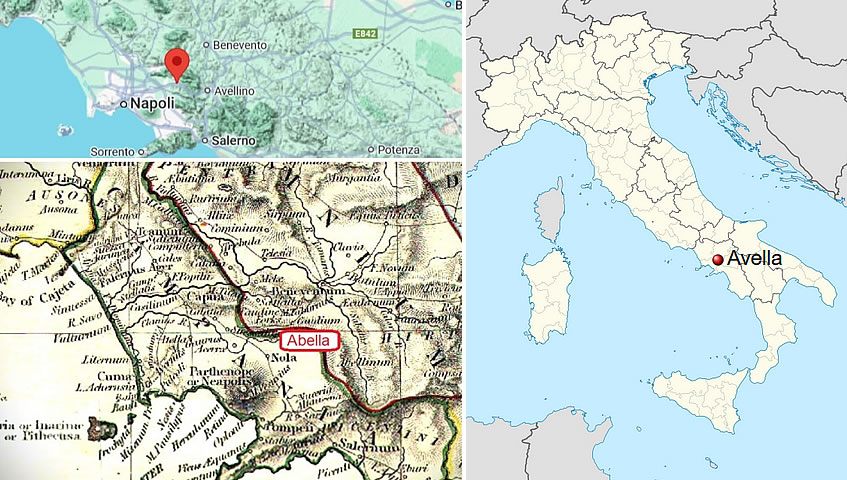
Abella, now known as Avella, was an ancient settlement strategically located along a natural route connecting the coastal regions of Campania to the Irpinia inland. This location provided a pivotal position for trade, communication, and defense. The etymology of "Avella" is uncertain and steeped in local lore and geographic features. According to the Roman historian Justin, the city's Chalcidian settlers called it abel, meaning "grassy field suitable for grazing," a name that reflects the area's fertile plains, shaped by volcanic soil. Another theory suggests that the name originates from the Latin avello, meaning "to uproot with force," referencing the strong local winds known to unearth trees and even uncover buildings.
Abella's history, however, remains partially hidden. Centuries of pillaging and destruction forced its residents to flee into the nearby mountains for extended periods, making archeological evidence scarce and limiting what can be definitively known about the city's past.
Human presence in Abella traces back to the Upper Paleolithic period, with the first settled community believed to have arisen in the Apennine phase. Artefacts from the transition between the Copper and Bronze Ages (circa 2000 BCE) have been discovered, alongside Iron Age relics (7th-6th centuries BCE), which include intricately decorated black-glazed pottery and metallic vessels. These finds came primarily from burial grounds near the Clanio River. Avella was originally a settlement of the Osco people (in Greek Oskoi), an ancient Italic population of pre-Roman Campania; later it underwent domination, first by the Etruscan population, then by the Samnitesc one.
Around 700 BCE, the Greek colonization of Campania's coast marked a new chapter in Abella's history, as the city became a central point for exchange among Greek, Etruscan settled in Capua, and Italic cultures. According to Servius, the city was mythically founded by King Muranus, who named it Moera, though both the founder and the name remain largely legend. Another account attributes Abella's founding to Greek colonists from Chalcis, though archeological evidence for this remains limited.
The Chalcidian were Ionian people who colonized the homonymous Greek peninsula, especially in the 7th century BCE, and areas of the Mediterranean Sea. Between the 8th and 7th centuries BCE in peninsular and insular Italy alone, 8 cities were founded including Kyme (Cuma), and some of them became important polis of Magna Graecia. In Italy, they forged strong commercial and cultural ties with the Etruscans, who used as their alphabet that Chaldean of Cuma, from which that Latin derives. In fact, the Etruscans did not have their own writing form, at least until they had contact with the Greek settlers in Italy: they began to use a version of the Euboic-Chaldean Greek alphabet, precisely that of the Cumans and Ischian.
The city of Abella predates Rome's founding in 753 BCE, having already been described as a populous and war-ready city by that time.
Evidence from the early 7th century BCE indicates Abella's increasing trade and cultural exchange with nearby regions. Artefacts from this period include a geometric-style oinochoe from Cuma, a decorative askos from Daunia (present-day Foggia), and vases from Caudium, Suessula, and Pithekoussai (Ischia). These objects reflect the city's integration into a broader network of Italic and Mediterranean civilizations.
The later Orientalizing period (circa 650-545 BCE) saw an expansion of burial grounds on both sides of the city, though the city's residential areas remain largely unexplored. Finds from these tombs demonstrate the diverse cultural influences shaping Abella, as they include artifacts from Greek, Italic, and Oriental origins.
In 399 BCE, Abella allied itself with Rome, becoming a civitas foederata that retained its internal governance through an oligarchic senate allied to Rome. Positioned within Campania Felix, an agriculturally rich region, Abella was less influential than neighboring Nola but remained a significant medium-sized Campanian center.
Historically under Samnite rule, Abella followed Nola's political trajectory, receiving an oligarchic constitution from Roman general Marcus Claudius Marcellus in 216 BCE.
Abella's architectural legacy includes substantial buildings such as a theater, an amphitheater, an aqueduct, and a basilica. East and west of the city, tombs spanning from the Iron Age to the Roman period were discovered, attesting to the city's longevity and continual use as a burial site. East and west of the city are tombs dating from the Iron Age to the Roman period. The necropolis developed between the late Hellenistic and the first imperial age along an extra-urban road axis that, leaving the ancient city of Abella, led west towards the plain of Campania. A depiction of Abella's Roman amphitheater, whose ruins remain today, appears on a statue base from the Antonine era and is now displayed in Avella's Ducal Palace square. The amphitheater was constructed in opus reticulatum (stonework) where the houses of the Samnitesc period were destroyed during the war between Marius and Sulla (1st century BCE), that is immediately after the transformation of Abella into a Roman colony.
Built at the eastern end of the Decumanus Maximus, it was supported partly by the walls of the ancient city, partly by a natural slope and partly by large vaulted buildings. Its most obvious atypical feature was the fact that it had no underground and tunnels, as opposed to, for example, the Colosseum or the nearest Flavian amphitheatre at Pozzuoli. It can be considered, without doubt, one of the oldest in Campania and very similar in size to that of Pompeii.
Among the most important findings in the urban area are reported:
During the Social War (91-89 BCE), when Italian cities sought civil rights, Abella remained steadfastly loyal to Rome. This loyalty was rewarded with the status of Municipium under Emperor Vespasian, and his lands were distributed to the veterans. The Municipium granted the city certain privileges, although political rights remained limited and military and economic obligations high.
By 73 BCE, Abella had become a Roman colony, as evidenced by the territorial centuriation (land division) expanding from nearby Nola. The Samnites who still occupied Nola retaliated against this allegiance to Rome, ravaging Abella and its territory after Sulla's withdrawal from Campania in 87 BCE.
The Samnites (or Sabelli) were an ancient Italic population inhabiting the Sannio and adjacent regions in southern Italy between the 7th-6th century BCE and the 1st century CE. In the Roman era, Abella underwent its first formal urban planning. The city of that time had a rather rounded shape, was enclosed by walls and equipped with six gates. The eastern part of these walls has survived near the amphitheatre. Inside, the urban area was divided into four sectors by the intersection of two orthogonal roads while the neighborhoods, so identified, were in turn divided according to the typical eponymous chess board, articulated in cardines (hinges), in north-south direction, and decumani, in east-west. The old route, thus outlined, remained readable in time as it continued to constitute the road scheme around which the rest of the country was structured, excluding medieval age. In particular, the current Corso Vittorio Emanuele, oriented east-west, corresponds to what was the ancient Decumanus Maximus.
Abella's fertile lands inspired admiration from ancient authors. Virgil famously dubbed it Malifera Abella ("Abella, land of apples"), referencing its abundant fruit and agricultural productivity. In the Aeneid, Virgil also noted Abella's alliance with Turnus against Aeneas, highlighting the city's historical significance. Other writers, including Silius Italicus, Strabo, and Livy, celebrated its produce, especially hazelnuts, which contributed to Abella's renown.
Following the fall of the Roman Empire, Abella faced devastation during the Visigothic invasion led by Alaric, followed by attacks from the Vandals under Genseric and the Alans. These repeated invasions forced the population into the surrounding mountains, leading to Abella's gradual decline. The Longobards of Benevento took control in the 6th century, resisting Saracen invasions in 883-884 and subduing Byzantine forces in 887. The city suffered further under Hungarian raids in 937, leaving Abella largely abandoned.
Only with the arrival of the Normans did Abella's population resettle, sparking a new era of stability and development.
This page was last edited on 21 March 2026
Campania Felix and Abella
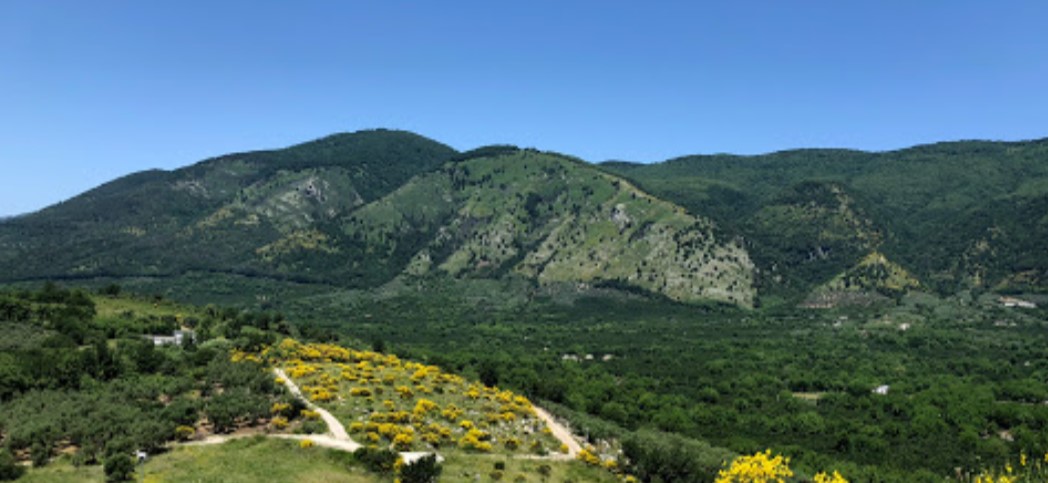
The abel (grassy field suitable for grazing) territory around Abella
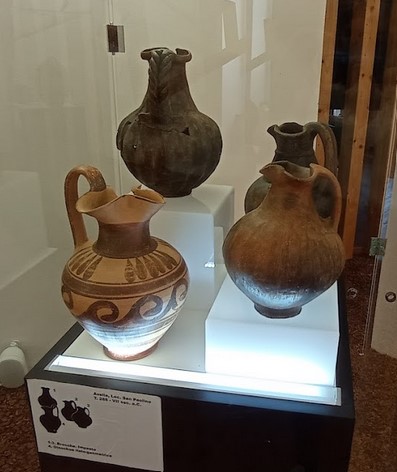
Vases dating from the 8th century BCE
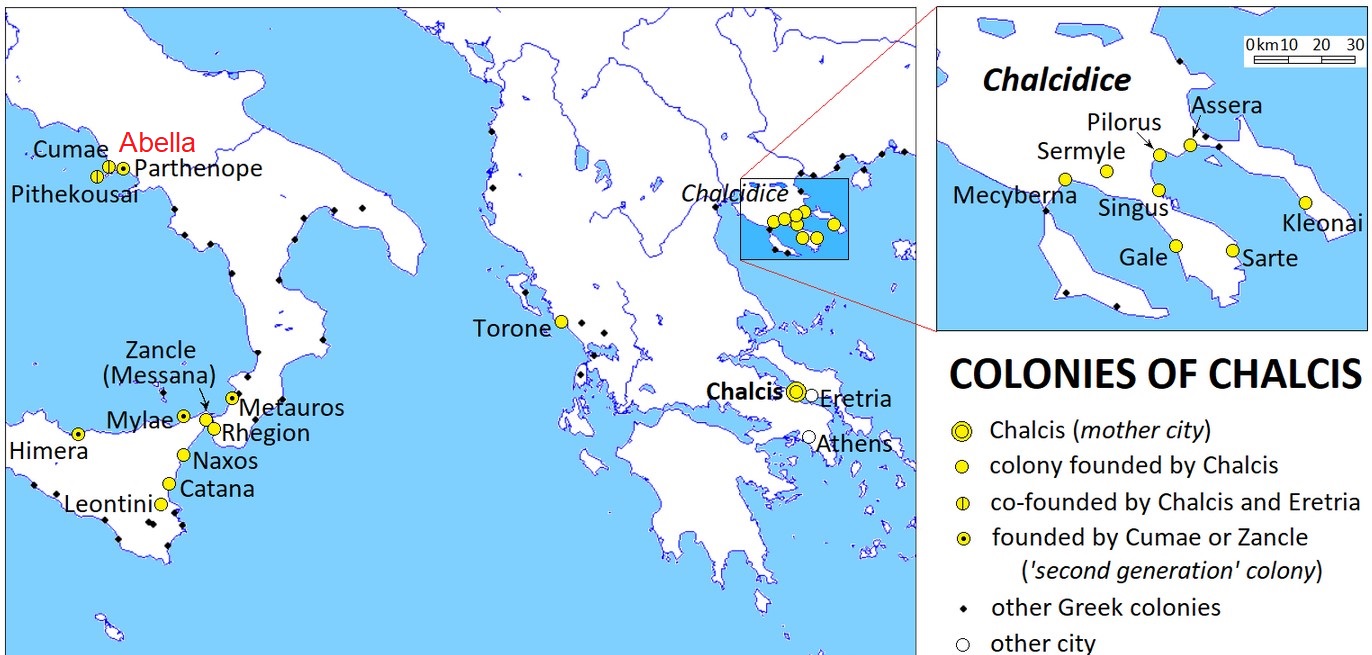
Colonies of Chalcis
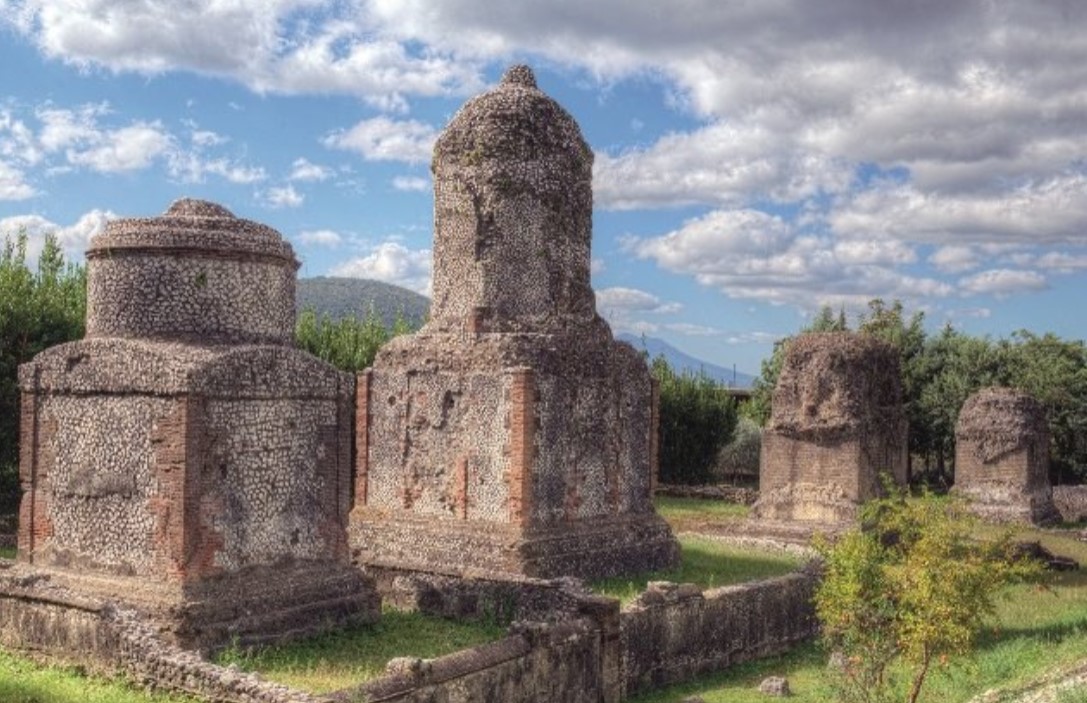
Roman tombs of Avella. Monumental necropolis of locality Casale
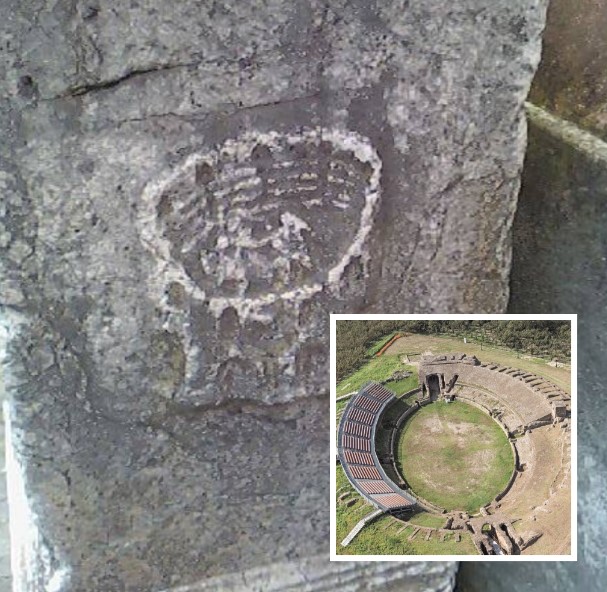
A statue base with a relief of Abella's Roman amphitheater , the Antonine era - Avella's Ducal Palace square
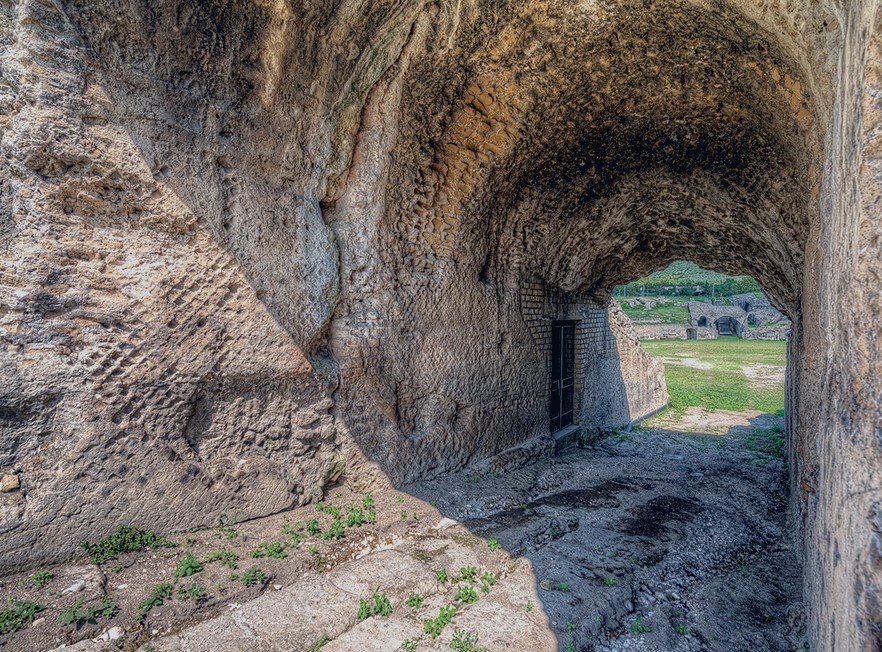
Abella's Roman amphitheater constructed in opus reticulatum (stonework)
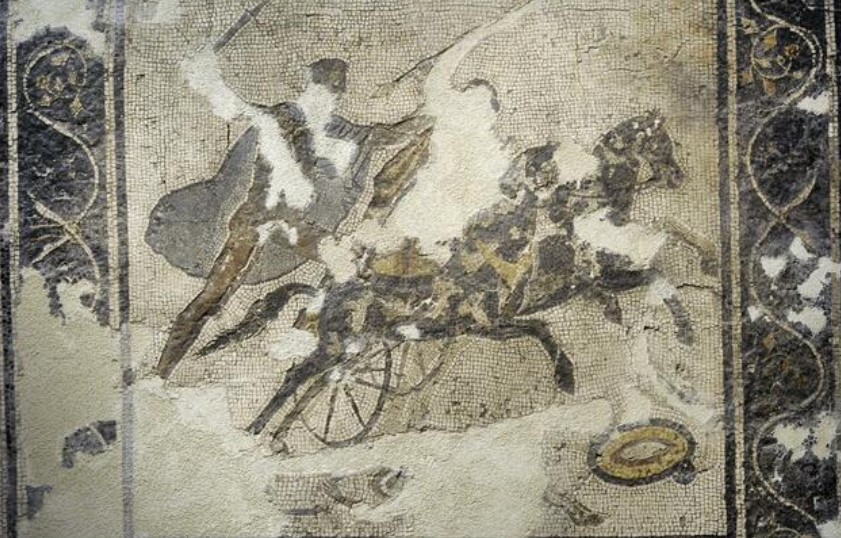
Oedipus and Laius. Roman mosaic. 1-49 Ad. From Avella. Campania. Italy. National Archaeological Museum, Naples. Italy
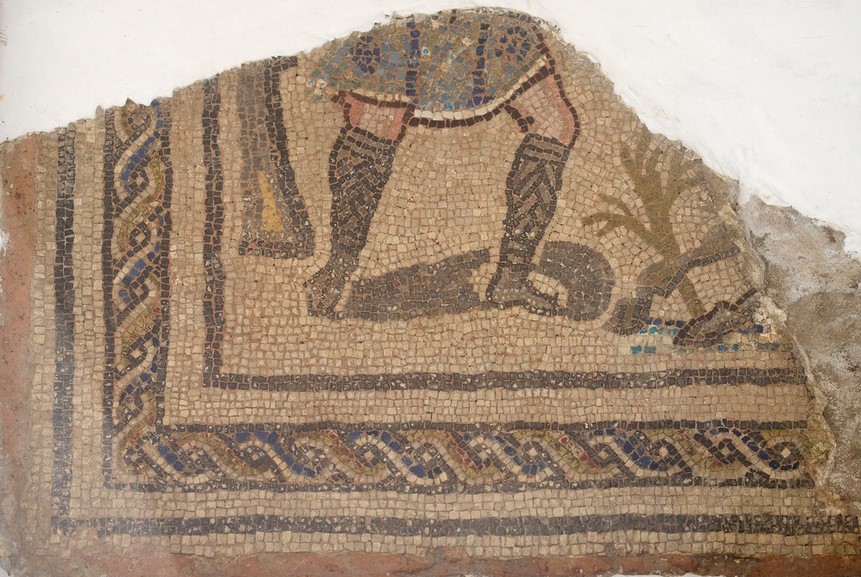
Polychrome Figural Mosaic (Emblema), Avella (3rd-4th century AD) - The emblema was a particularly widespread type of mosaic in the Roman world. It consisted of a "framed mosaic" made with very small tesserae. This "panel" was extremely valuable, not only because of the minuscule size of its tesserae but also due to the range of colors and shades of the stones used. Emblemata were luxury works, often original pieces or copies of famous paintings, and thanks to their small size, they were easily transportable. Indeed, it is said that Caesar loved to adorn his tent during his military campaigns with such mosaics. In antiquity, mosaics were typically created using the direct method, meaning the tesserae were placed directly onto the plaster, where a guiding design had been previously drawn. In the case of emblemata, however, due to their intricacy and the technical difficulty of their execution, they were instead crafted in a workshop using a wooden tray. Once completed, the work would be set into the floor. It was this different method of production that also made them transportable. The fragment of emblema on display, likely originating from Avella and belonging to the Zigarelli collection, probably depicted a hunting scene.
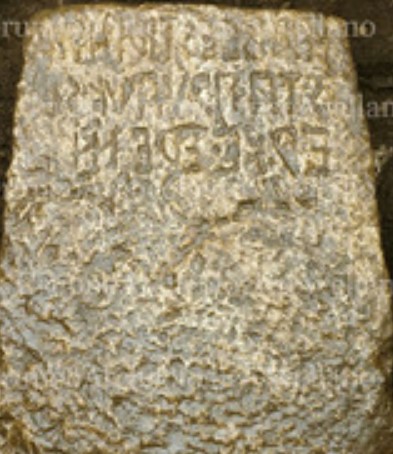
m)a) is.vestiri. m)a) i.
sta.prupuk.sv
er.kv.te) rem.
Maio Vest(i)ricio, (son of) Mai(o) (,)
Is (... or?) (,) prupuk(id) (,) sverrone
(,) quaestor (the police commissioner), made the confinement (scil., placed the cippes)
"To Maius Vestiricius, son of Maius, he (?) ... placed (as) a boundary (or: placed the boundary stones) for the surveillance (?) ... quaestor ... carried out (the work)."
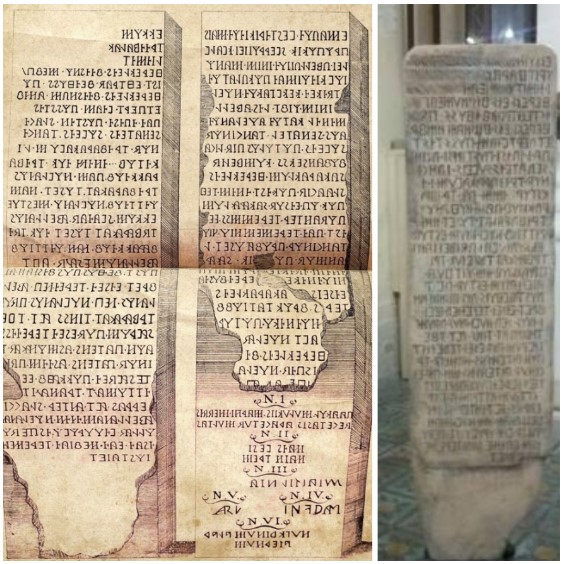
Cippus Abellanus
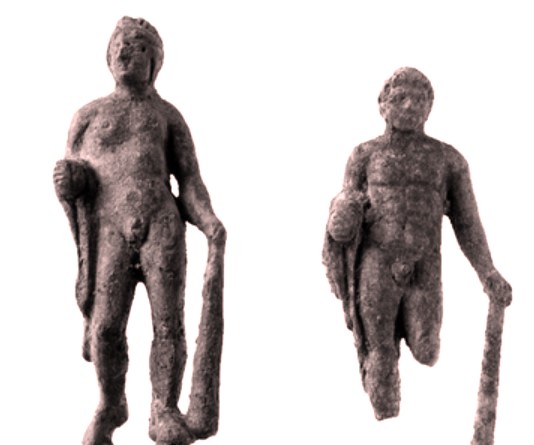
Avella, Paenzano. Figurines of Hercules
![Fresco of a Samnite tomb [Weege Tomb 30] found in Nola showing the return of Samnite warriors from battle - National Archaeological Museum of Naples (MANN)](../news/abella-avella-13.jpg)
Fresco of a Samnite tomb [Weege Tomb 30] found in Nola showing the return of Samnite warriors from battle - National Archaeological Museum of Naples (MANN)
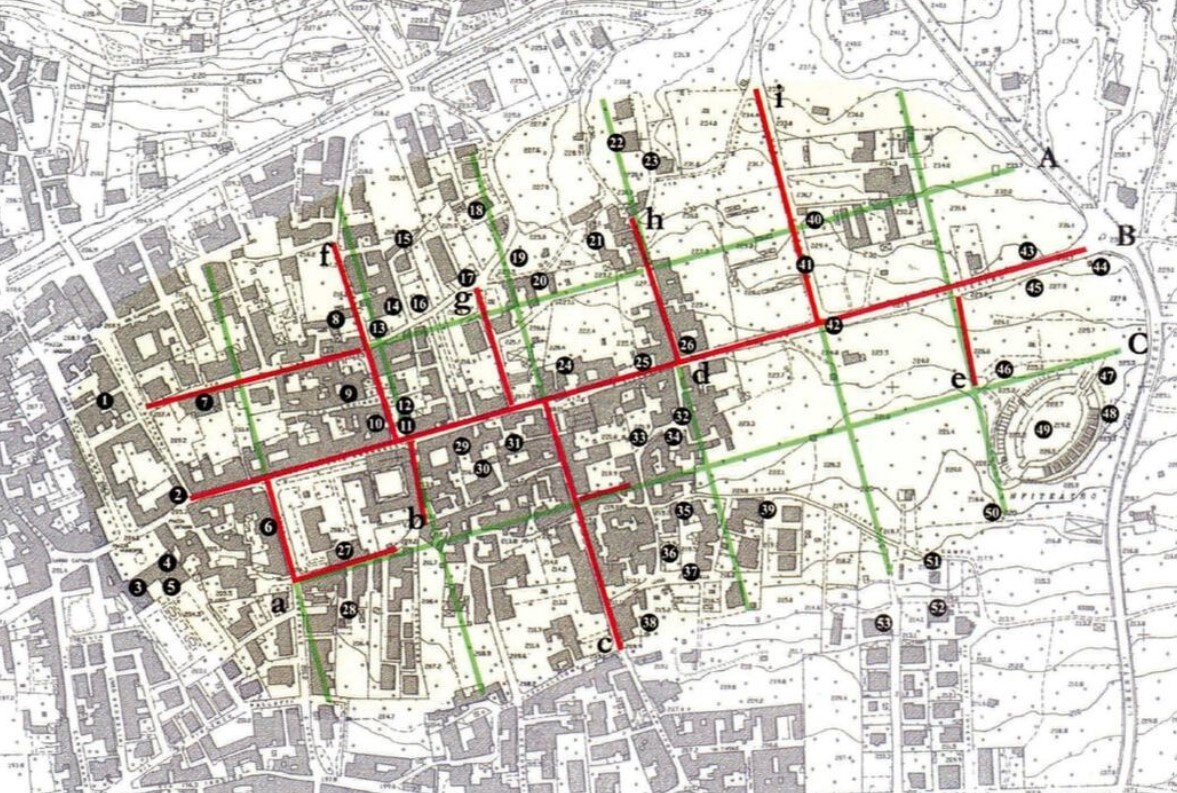
Map of ancient and modern Abella and Decumanus Maximus
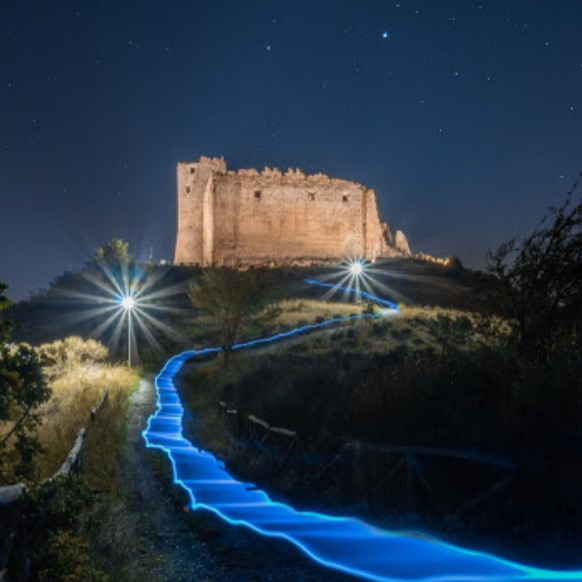
Abella's Castle
© andmorestory.eu - All right reserved