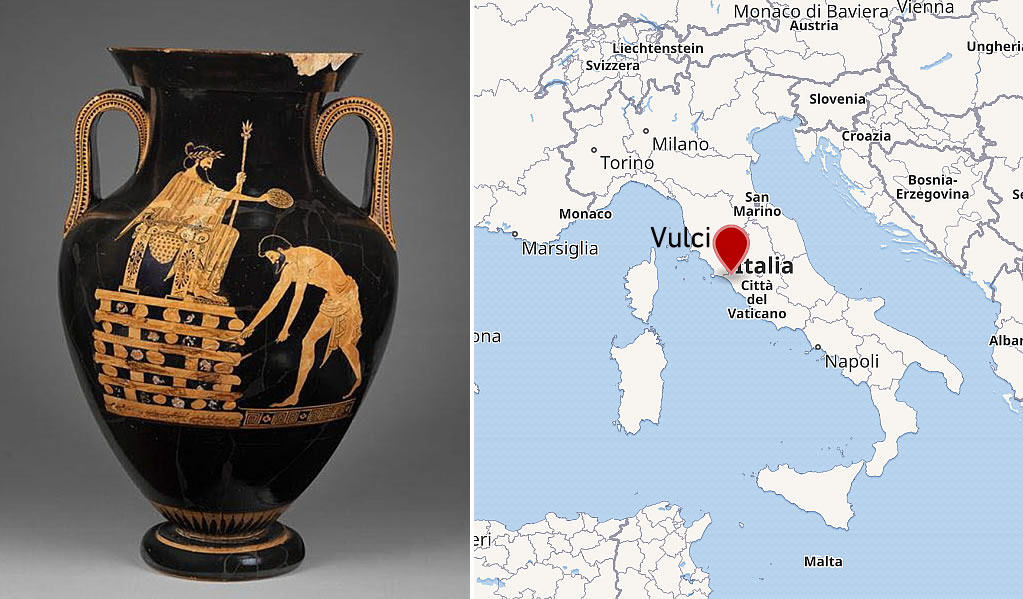
Croesus at the stake. Side A from an Attic red-figure amphora, ca. 500–490 BC. From Vulci (Viterbo, Italy) - Louvre Museum, Paris.

Abradatas (in Latin, Abradates) was a Persian prince from Susiana, believed to have lived around the mid-6th century BCE, though his historical existence remains uncertain. We know of him primarily through Xenophon, who recounts his story in the Cyropaedia. The author narrates the poignant tale of Abradatas, the king of Susa (modern-day Shush), and his wife Pantheia, a woman of striking beauty renowned for her modesty and virtue. In 558 BCE, Cyrus of the Achaemenid dynasty succeeded his father Cambyses as ruler of Anshan in Susiana. He began to construct the first great Persian Empire with the conquest of Media, seizing Ecbatana in 550 BCE and overthrowing the rule of his maternal grandfather, Astyages. Cyrus then continued his expansion with a campaign in Lydia, where Abradatas had initially aligned himself with the Assyrians against him.
During this time, Pantheia was captured by the Persians while Abradatas was on a mission for the Bactrians. Cyrus treated her with respect and honor, which inspired Pantheia to persuade her husband to support Cyrus. In gratitude, Abradatas pledged his loyalty and contributed to Cyrus’s ongoing war efforts against King Croesus. However, during a battle against the Egyptian forces in the conquest of Lydia, the courageous Abradatas met his end (c. 546 BCE). Following the conclusion of the Lydian campaign (547 or 546 BCE), Cyrus seized Sardis, its capital, capturing Croesus, the Lydian king. In some accounts, Croesus was executed, while others claim Cyrus spared him, extending clemency to all of Ionia. According to 'The Histories' by Herodotus, Croesus, taken prisoner, was placed on a great pyre by order of Cyrus, who wanted to see if supernatural forces would intervene to save him from the flames. Cyrus lit the fire, invoking Apollo, but suddenly, from a previously clear sky, rain and wind arrived, extinguishing the flames. Convinced of Croesus’s worth, Cyrus spared him and appointed him as his advisor—a position Croesus continued to hold under Cyrus’s son, Cambyses. Cyrus himself died eighteen years later in a battle against the Massagetae beyond the Iaxartes River, by which time the Persian Empire had become the largest political entity in the Near East.
The Athenian vase painter (the artist who decorated and signed vases) Myson (Ancient Greek: Myson, c. 500–475 BCE) chose this story of Croesus (Kroisos, c. 560–540 BCE) as the central subject for one of his amphorae, now considered one of his most representative works and unique of its kind. On the main side, the painter depicted Croesus preparing for death, seated atop a high pyre of interwoven logs, which his servant Euthymos feeds with torches. Croesus is portrayed as a crowned, bearded king wearing an elegantly decorated chiton; in one hand he holds a scepter, while with the other he pours liquid from a phiale in a solemn libation gesture. But a miraculous rain sent by Apollo saved him from the flames.
The vase was made in Athens, discovered at Vulci in an Etruscan funerary assemblage, and acquired by the Louvre Museum in 1836. Indeed, eight years earlier, the necropolis of the ancient Etruscan city of Vulci, near Canino, had been discovered on lands belonging to Lucien Bonaparte, brother of Napoleon. In the first excavation alone, thousands of ancient tombs were brought to light, and two thousand vases were unearthed. Excavation work continued with the support of Lucien and his wife, Alexandrine de Bleschamp, uncovering immense riches. The couple, who had long faced financial difficulties, partly kept and partly sold the most precious artifacts to museums and private collections around the world to generate income, while they had the less valuable items destroyed. It was in 1836 that Lucien began to experience the same stomach ailment that had afflicted his brother, and four years later he died at the age of sixty-five. Stendhal calculated in March 1837 that these vases had yielded the Prince 700,000 francs—a sum that would rise to 1,200,000 francs by 1840. After Lucien’s death, his family faced severe financial difficulties. The excavations he had begun were halted in 1840 upon his death, but his widow, Alexandrine, resumed the efforts until 1846 with mixed success. The primary goal of the Bonaparte family during this period was to restore their perpetually precarious finances, which were in constant crisis.
This page was last edited on 21 March 2026
Croesus at the stake. Side A from an Attic red-figure amphora, ca. 500–490 BC. From Vulci (Viterbo, Italy) - Louvre Museum, Paris.
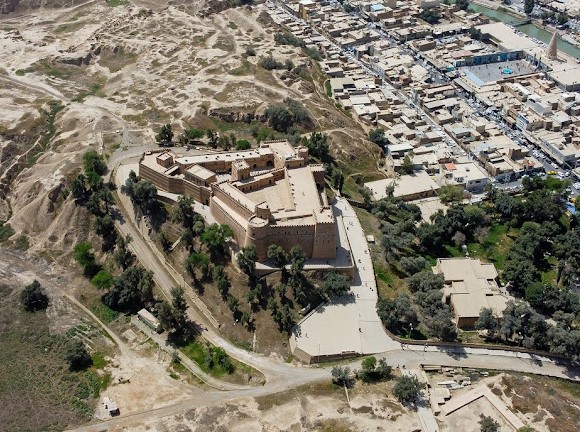
On left, the archaeological area of Susa
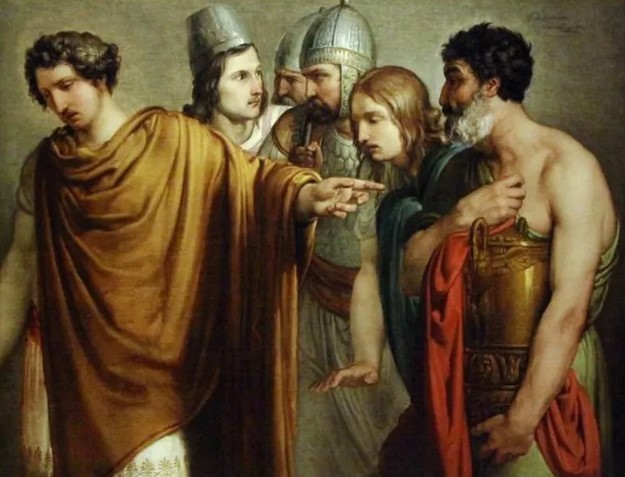
The death of Abradatas, by Francesco Hayez, 1813; Gallerie d'Italia - Milan
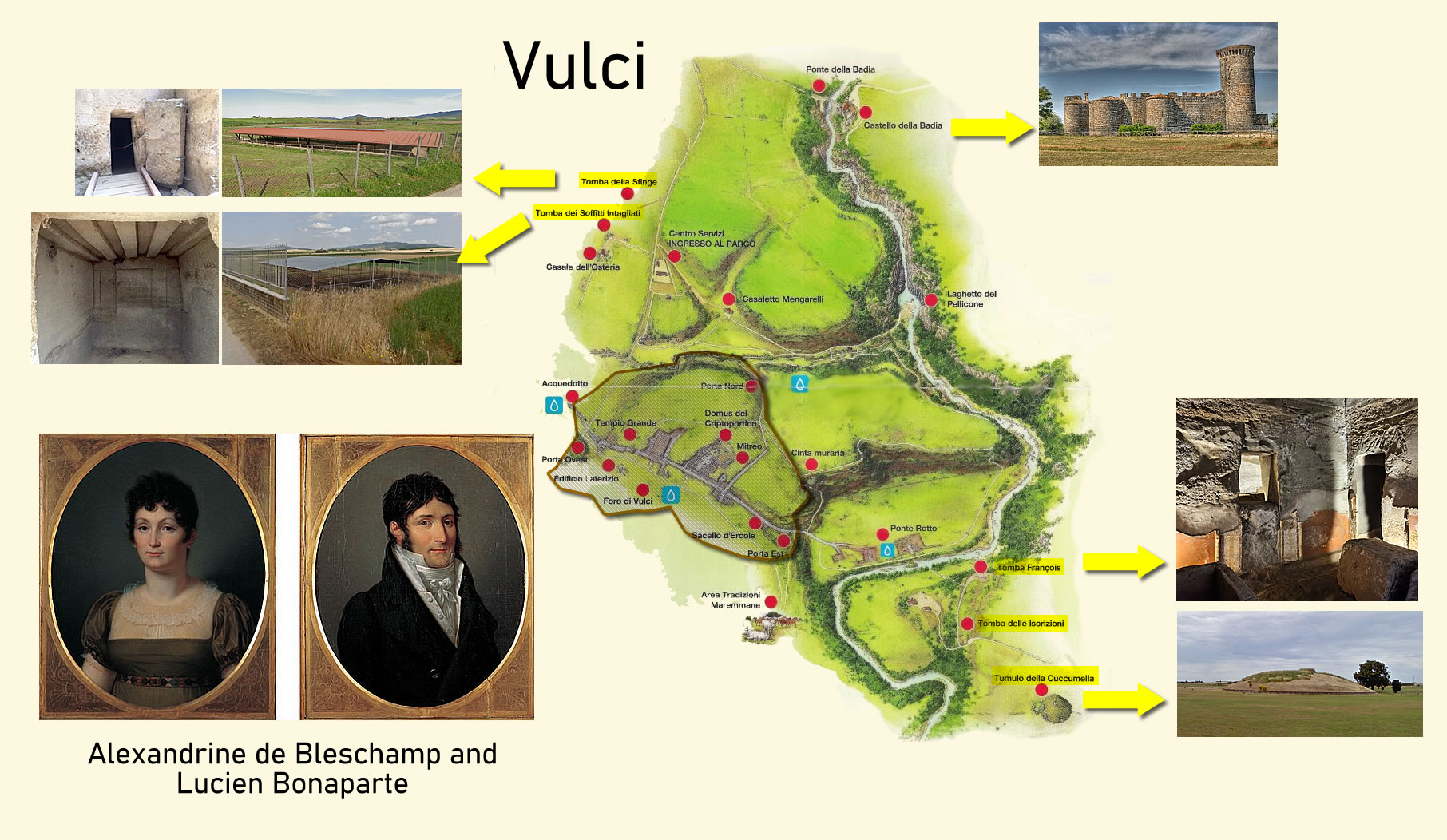
Vulci city and necropolis
© andmorestory.eu - All right reserved