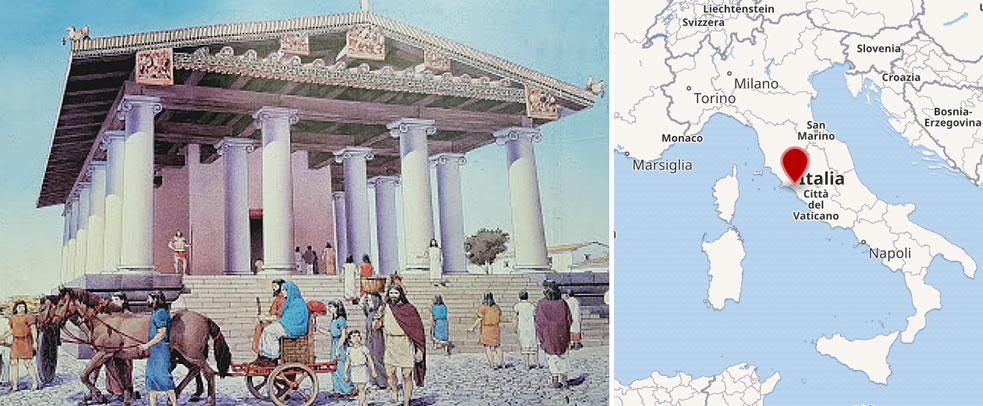
Etruscan temple at Vulci

Vulci or Volci (Etruscan Velx, Greek Velzna) was a wealthy Etruscan maritime city located in what is now northern Lazio, about 80 km northwest of Rome. Vulci was so well known, that it was included on the Grand Tour of Europe. Today, visitors can still see the remains of the city and its necropolis.
It was one of the legendary dodecapolis, an Etruscan League formed to protect their interests. Vulci's expansion began during the Orientalising period of the 8th century BCE, marked by the production of bronze objects that appeared in Greece towards the century's end. The 7th century saw the import of sophisticated products from many Mediterranean markets, highlighting Vulci's growing wealth and culture. The city reached its peak of influence and wealth in the 6th century BCE, becoming a center for importing refined Attic pottery, precious oriental balms, and exquisite jewels for its affluent citizens. This period is evidenced by numerous masterpieces of Greek and Etruscan art found in the tombs. Vulci exported its treasures, including pottery, bronzes, and wine, throughout the Mediterranean.
After the population of Rome became predominantly Italic, the Etruscan kings were overthrown, leading to a period of crisis in the latter half of the 5th century. However, Vulci experienced a resurgence in the 4th century. The Romans eventually took control of Vulci's coastal regions, which diminished the city's power and contributed to its decline. The Etruscan League disintegrated during the war, and the Etruscans were gradually assimilated. Vulci's significance waned during the remaining Roman period.
A stamnos of Kleophon Painter, known as "A warrior leaving home", was discovered in Etruscan necropolis at Vulci. The date range, as with almost all other Kleophon Painter vases, is 450 to 400 BCE. This bell krater is an excellent example of a painting of a departing warrior is found on Attic red-figure. The scene on side A shows the warrior flanked by two other figures; an old man who appears to be handing the warrior his helmet, and a woman who is seen holding the warrior’s shield. The old man and the woman are both wearing robes while the warrior is depicted nude, he is wearing nothing but a headband and a sheath with his sword in it. His robe is draped over his left arm which is holding his spear. Side B shows three youths all wearing robes. The eyes, again, are all triangular in shape. The youth to the far right has his right hand up as if telling the other two youths to stop or slow down. He is facing to the left (as you look at the vase) while the other two are facing back at him. All three have very similar, almost identical faces. They all have on the same style robes and are wearing a thin headband covered somewhat by their hair.
Stamnos is the name of a form of ancient vases produced in Greece from the late 6th century BCE and the end of the 5th BCE, instead in Etruria until the 4th BCE. The earliest known examples come from archaic Laconia and Etruria, and they began to be manufactured in Athens around 530 BCE.
Stamnoi were large pottery jars for carrying wine with a foot, wide mouths, lids and handles on their shoulders. But according to literary sources, they indicated in antiquity large containers such as amphoras, not necessarily having this particular form, and intended to store a considerable amount of oil, wine and even money. Commonly they are decorated with red figures, but they also exist in black figures. The most recent specimens are recognized because they are slimmer and taller. Those with lids were used for storing liquids (such as amphora), or for serving wine at banquets (such as craters).
The Kleophon painter is the name given to an anonymous Athenian vase painter in the red-figure style who flourished in the mid-to-late 5th century BCE. He is thus named because one of the works attributed to him bears an inscription in praise of a youth named "Kleophon". He appears to have been originally from the workshop of Polygnotos.
The Kleophon Painter was likely located in or around the city-state of Athens, as his work was mostly discovered there. Twenty-two of the Kleophon Painter’s vases are still located in Athens at either the Agora Museum or the National Archaeological Museum. The themes of his vases for the most part stick to a few specific genres, specifically, Greek mythology, domestic themes (including sacrifices and parades), and paintings of warriors. Even in the 5th century BCE he shipped vases as far as Italy and Spain, according to the provenance that the vases have been found in. The majority of his vases are bigger vases, with only a few smaller ones. Most of his vases are kraters. One painter that he was similar to was the Dinos Painter, thus is hard to distinguish between. One of the ways to identify works by the Kleophon Painter is by the characters on the vase, especially the eyes and chin. In the Kleophon Painter’s case, the eyes are usually a rounded off triangular shape and the chin is generally rounded off or even bulbous at times.
Etruscan temple at Vulci
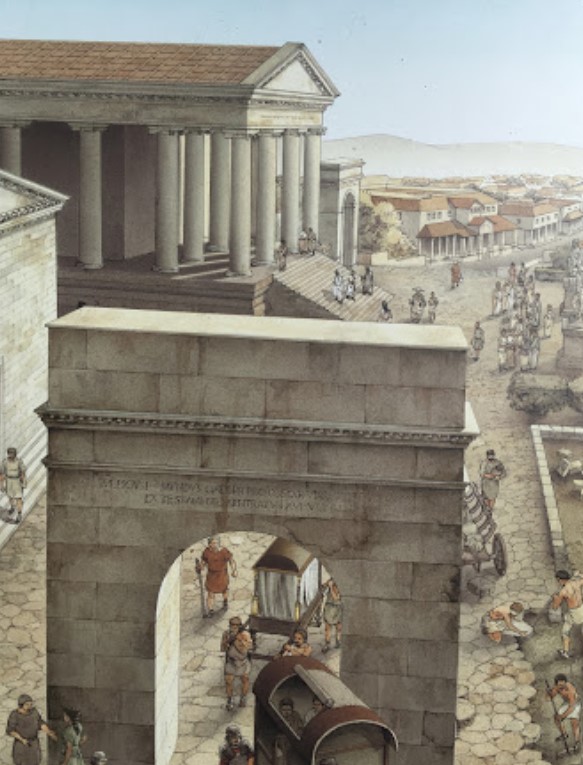
Roman Vulci
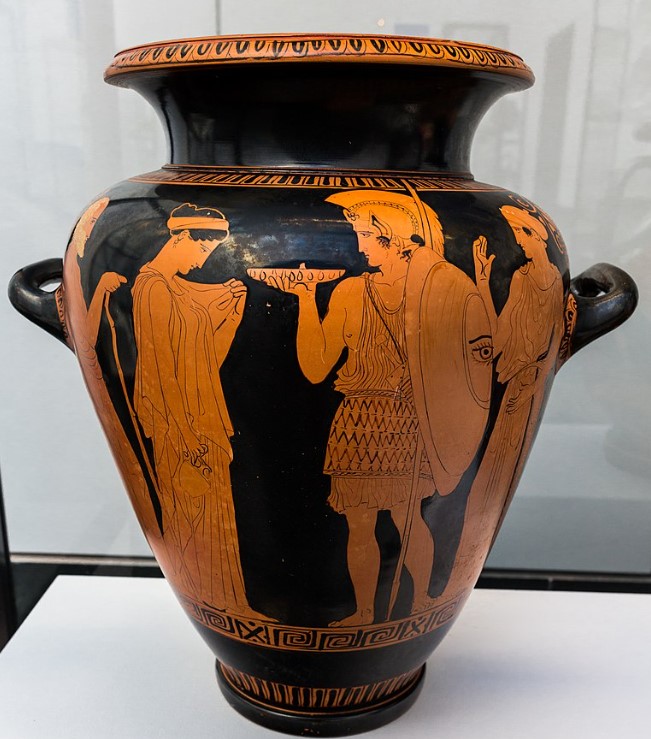
A warrior leaving home. Side A of an Attic red-figure stamnos attributed to the Kleophon Painter: old man with staff (father), woman (wife), hoplite holding phiale, woman (mother). From Vulci, 440–430 BCE, height: 43,5 cm. Staatliche Antikensammlungen in Munich, Germany.
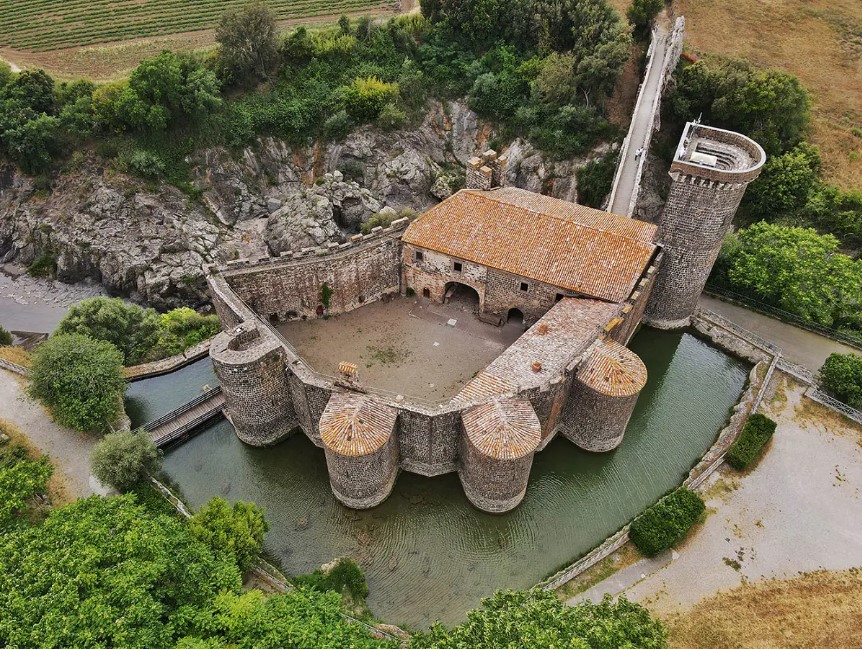
The Castle of Vulci Museum.
This page was last edited on 14 March 2026
© andmorestory.eu - All right reserved