The Comet Was Right
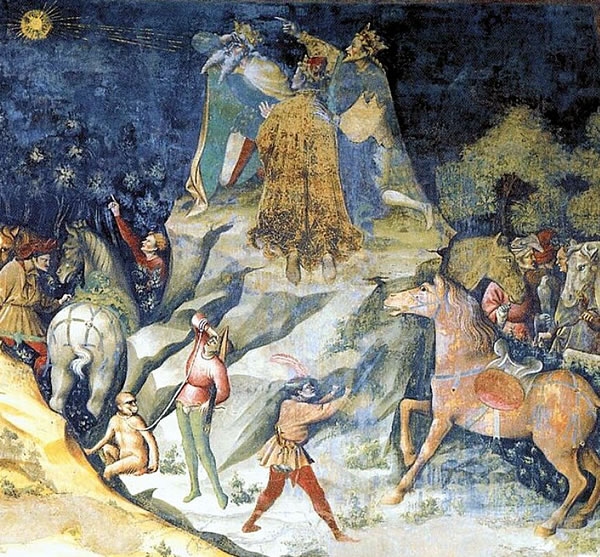
For ancient astronomers, comets represented a genuine enigma: they appeared and disappeared suddenly, they did not move, unlike the other wandering stars, along the zodiacal band, and they were followed by a luminous tail of varying size. Moreover, it was not even known if they were astronomical objects or simply atmospheric phenomena. However, there was a long tradition that saw a connection between the appearance of comets and human affairs; a tradition that dates back, as is known, to the Romans, and indeed to the Egyptians. Old stories and chronicles of the times are full of anecdotes on the matter. Celestial phenomena—like terrestrial ones, not infrequently—in those fantasies sickened by centuries of strange, melancholic autosuggestion, often took on erroneous and bizarre forms.
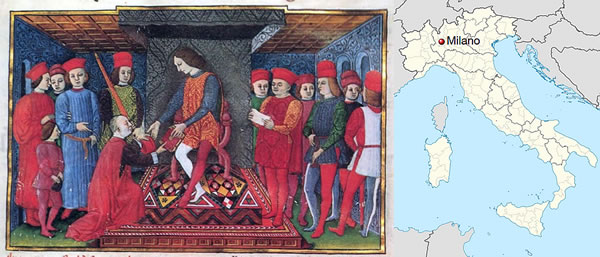
In the medieval era, the tendency to consider comets as ominous signs, bearers of disaster, intensified. Celestial phenomena were also feared by the superstitious Sforzas of the Duchy of Milan. With each passage of a comet, they hastened to gather news and seek reassurance from physicians and astrologers. However, the responses were often contradictory and never enough to reassure them. The judgments were mostly laden with threats: great mortality and ills for men, wars, plague, drought, diseases; in short, ruin of every sort.
There were the most bizarre lucubrations, the most curious calculations in relation to the movements of the stars. It was a continuous trepidation among all prominent people over the occult dangers threatened by the stars. Every so often, some sensible person rose up to protest against these dubious theories that ultimately sowed only terror.
42 comet passages are known from the 15th century; in Italy, the one of February 21, 1472 is remembered, which, according to some astrologers, presaged plague. The court of the Duchy of Milan, wanting to know if such judgments were reliable, immediately consulted other renowned astrologers, Maestro Francesco da Busto and Maestro Raffaele da Vimercato, and they replied to reassure the duke that those predictions had no basis and that the comet instead foretold other ills: war towards the East, without harm to the duchy, and some bad effect towards the Pope and the Most King.
For that time, the duke could sleep peacefully because he knew that when the plague also struck Lombardy (1424, 1451, 1468, 1477, and 1483) the court had to surround itself with more serious precautions and give up consulting the stars to protect the body from the terrible scourge. Thus, declarations would depart from Milan to quarantine affected cities. It happened that the poor health officials, not knowing what to do, issued order upon order, advised citizens to purge themselves, ordered quarantines for suspected persons, isolated the infected, burned clothes, expelled foreigners... and commended themselves to God. The disease sometimes wreaked havoc, and the health office compiled long lists of the names of the dead which they communicated to the duke.
In those years, Galeazzo Maria Sforza (1444–1476) was Duke of Milan. It is told that while returning from having repelled the Burgundians of Savoy, in aid of his future son-in-law Filiberto, a comet appeared to him in the sky, a sure sign of impending misfortune. Upon arriving at the castle of Abbiategrasso, he was informed that his bedchamber in Milan had burned down. Whether because he no longer believed in omens or was moved by other reasons, Sforza departed the following day for Milan to spend the Christmas holidays with his family.
On St. Stephen's Day, according to custom, the duke was to solemnly attend Mass with his Court at the church dedicated to the holy Martyr. But the morning was bitterly cold and he was reluctant to leave the castle. So he called his chaplain to say mass in the ducal chapel; but he had already gone to the church of Santo Stefano. He called the Bishop of Como to say it in his stead, and he could not oblige him. Thus, surrounded by courtiers, he prepared to leave the Castello di Porta Giovia to go and hear mass at Santo Stefano, where the clergy in great pomp and the chapel singers awaited him, even though it had become late.
He tried to arm himself under his clothes with a cuirass that might have defended him somewhat, but he had to leave it off, because it bulked him up too much. He ended up donning a sumptuous crimson satin garment, lined with sable, cinched at the waist by a silken cord; he covered his head with a similar cap; he pulled on two little white boots that fit him perfectly over his hose, one white and one red. Almost seized by gloomy forebodings, he had his little children brought to him and embraced them repeatedly, kissing and re-kissing a thousand times the children from whom he could not bear to part. Mounted on horseback, he set off towards the church of Santo Stefano behind the Duomo, followed by his brothers Filippo and Ottaviano, the Bishop of Como, the ambassadors of Ferrara and Mantua, and the courtiers.
Upon reaching the church, the crowd was so great that the footmen had to make way with drawn swords. The duke with difficulty managed to enter, and a few steps beyond the threshold of the church, he met the death that the comet had foretold. Three conspiring Milanese nobles approached him and, swiftly, struck him again and again with daggers. The duke fell dead; the church in an instant was all in an uproar and the conspirators sought escape in flight. In the scuffle, one of them fell, the footmen were upon him and struck him, while his other two companions reached the street escaping. Thus ended Galeazzo Maria Sforza, a most avaricious sovereign and imposer of unusual taxes; a man who demonstrated a strong-willed character, but with hints of sadism and brutality. He was extremely cruel and capable of torturing even his own friends to the point of madness. It is said that because an astrologer priest had predicted the date of his death, Galeazzo had him walled up alive and wanted to see him die of hunger. All these reasons were at the basis of the conspiracy that cut him down in 1476.

![Piero Pollaiuolo (1441-1496) painted this portrait during one of Galeazzo Maria Sforza's visits to Florence. The work is based on a similar portrait by his brother, Antonio. That the portrait is of Sforza is beyond doubt, as copies exist bearing Sforza's name. Restored in 1994. - Title page [not frontispiece!] of Giovanni Andrea da Lampugnano’s Lament of the duke Galeazzo Maria (1476), complaing about the murder of the duke di Milan, Galeazzo Maria Sforza (1444-1473), inside Santo Stefano church.](../news/comet-was-right-1.jpg)