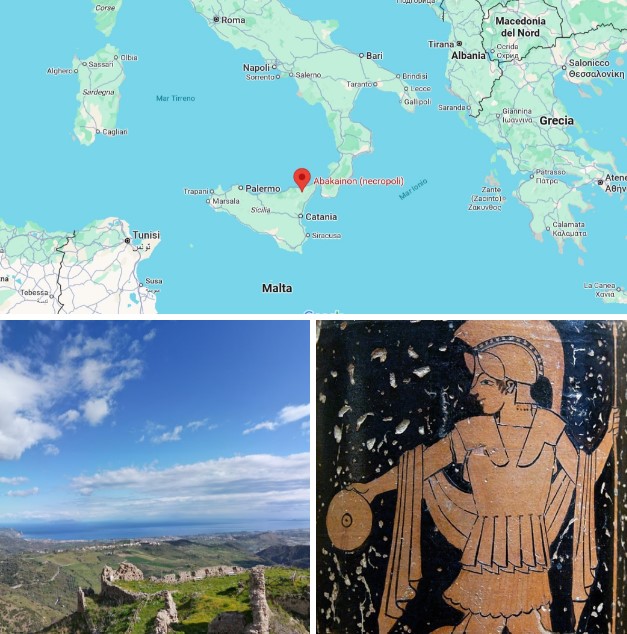
View of the Tyrrhenian Sea from Abacaenum or Abakainon and a Sicilian warrior with a phiale (departing?). Attic red-figure lekythos (Gela, Italy, 480-460 BC) - Archaeological Museum in Palermo, Italy

A journey through history to discover one of the most powerful cities of Sicily in Magna Graecia, inhabited by the Siculi and constantly at odds with the expansionist ambitions of Syracuse. Although it never became a Greek colony, it was deeply influenced by Hellenic culture and art.
Its history was marked by numerous events, from the golden age of Greek civilization to its fall at the hands of the Romans, who punished it for its alliance with Carthage. At its peak, the city boasted around thirty thousand inhabitants, yet at some point, it vanished from historical records, leaving only ruins buried by time for nearly twenty centuries.
One of the most renowned "Siculo-Greek" centers, its name has reached us through classical historians: to the Greeks, it was Abakainon, while the Romans called it Abacaenum.
Abakainon was located approximately 8 miles from the Tyrrhenian Sea coast, between Tyndaris (modern Tindari) and Mylae (modern Milazzo). The area had been inhabited since the Neolithic period (6800-6400 BC) and, during the protohistoric era, became the site of a settlement founded by the Siculi. In historical times, the Siculian-origin settlement began to develop as early as the late 6th century BC, thanks to its agricultural and pastoral vocation and its strategic position along a route that connected the northern and eastern coasts without passing through Zancle.
Situated at the foot of the mountainous region of Tripi, Abakainon enjoyed a privileged position between the Ionian and Tyrrhenian coasts, serving as a crossroads for commercial and military movements. The natural routes formed by the Francavilla and Novara-Mazzarrà streams facilitated connections with various parts of Sicily. The exact date of its foundation remains uncertain; according to some scholars, it may date back as far as 1100 BC.
In 396 BC, Dionysius of Syracuse founded the city of Tyndaris within the territory of Abakainon, near present-day Tripi. In 1550, the Sicilian priest, historian, and antiquarian Tommaso Fazello (1498–1570) came across a vast field of ancient ruins, some of which were still visible northeast of the Tripi castle. But he was unable to definitively identify them as belonging to Abakainon.
With the gradual Greek colonization, the city became Hellenized and took part in the revolt led by Ducezio, the leader of the Siculi. After his defeat, Abakainon became part of Dionysius I’s "Archonate of Sicily," as he consolidated control over the island's eastern territories. According to Diodorus Siculus, Dionysius I confiscated a large portion of Abakainon’s land to settle his mercenary soldiers following the foundation of Tyndaris. In 393 BC, when the Carthaginian Mago landed in Sicily, the city allied itself with Carthage. However, after suffering defeat against Dionysius I, it was forced to submit to Syracuse.
[-396] Dionysius settled in Messene a thousand Locrians, four thousand Medmaeans, and six hundred Messenians from the Peloponnesus who were exiles from Zacynthus and Naupactus. But when he observed that the Lacedemonians were offended that the Messenians whom they had driven out were settled in a renowned city, he removed them from Messene, and giving them a place on the sea, he cut off some area of Abacaene and annexed it to their territory [...]
[-393] At the conclusion of this year, in Athens Demostratus took over the archonship, and in Rome the cease magistracy was administered by six military tribunes,
Lucius Titinius, Publius Licinius, Publius Melaeus, Quintus Mallius, Gnaeus Genycius, and Lucius Atilius. After these magistrates had entered office, Magon, the Carthaginian general, was stationed in Sicily. He set about retrieving the Carthaginian cause after the disaster they had suffered,
for he showed kindness to the subject cities and received the victims of Dionysius' wars. He also formed alliances with most of the Siceli and, after gathering armaments, launched an attack upon the territory of Messene. After ravaging the countryside and seizing much booty he marched from that place and went into camp near the city of Abacaene, which was his ally.
When Dionysius came up with his army, the forces drew up for battle, and after a sharp engagement Dionysius was the victor. The Carthaginians fled into the city after a loss of more than eight hundred men, while Dionysius withdrew for the time being to Syracuse; but after a few days he manned one hundred triremes and set out against the Rhegians.
Arriving unexpectedly by night before the city, he put fire to the gates and set ladders against the walls. The Rhegians, coming up in defence as they did at first in small numbers, endeavoured to put out the flames, but later, when their general Heloris arrived and advised them to do just the opposite, they saved the city.
For if they had put out the fire, they would not have been strong enough to prevent Dionysius from entering, being far too small a number; but by bringing firewood and timbers from the neighbouring houses they made the flames higher, until the main body of their troops could assemble in arms and come to the defence.
Dionysius, who had failed of his design, traversed the countryside, wasting it in flames and cutting down orchards, and then concluded a truce for a year and sailed off to Syracuse [...]
[-315] Agathocles, however, went on to Abacaenon, an allied city, where he put to death those who appeared to be hostile to him, being more than forty in number [...]
[-311] ... and within a few days Messene and Abacaenum and very many of the other cities vied with each other in deserting to Hamilcar, for such was the desire that came upon the common people after the defeat because of their hatred of the tyrant [...]
[-269] After this, Hiero with a considerable army waged war against the Mamertines. Halaesa he brought over by surrender, and having been eagerly welcomed by the inhabitants of Abacaenum and Tyndaris, he became master of these cities and drove the Mamertines into a narrow area. For on the Sicilian sea he held the city of Tauromenium, near Messana, and on the Tyrrhenian sea he held Tyndaris. He invaded the territory of Messana, and encamped along the Loitanus River with ten thousand foot-soldiers and fifteen hundred cavalry. The Mamertines faced him with eight thousand foot-soldiers and forty (?) cavalry; their general was Cios [...]
- Library (8-40) by Diodorus Siculus
During the reign of Dionysius I, Abakainon had its own mint, producing its own coinage. In 1886, during agricultural work, several objects were discovered in a Hellenistic necropolis, suggesting the existence of a buried city. These included amphorae, ceramic fragments, and grave goods of great historical and archaeological value, along with silver and bronze coins bearing the inscription "ABAKAINON." It was through these findings that the Palermo-born archaeologist and numismatist Antonio Salinas (1841-1914) confirmed the identification of the site beyond any doubt.
The numismatic evidence supports the idea that the city was actively involved in trade and had significant economic interactions with its neighbors.
The coinage of Abakainon took place in three phases, from the 5th to the 3rd century BC:
Many of the discovered coins are housed in the British Museum in London, as well as in the "Santi Furnari" Museum in Tripi. The discovery of new coins in recent archaeological excavations could potentially rewrite the history of the city. One example is a pentanummus of Justinian I, pierced and used as a pendant, found near the burial of an individual who lived around the second half of the 6th and 7th centuries CE.
In 2023, excavations in Contrada Piano uncovered the agora and the imposing stoa of the ancient city. Over a hundred coins were found, dating from the Carthaginian period to the 6th century AD, providing evidence of Abakainon's prosperous economy and its commercial ties with the Mediterranean.
A curiosity: there are gold and silver mines in the province of Messina, which the ancient Siculi most likely knew about. Fazello (Deca I, p. 175, 1830) mentions that in his time, he could clearly see traces of ancient mines, and Dioscorides speaks of the gold and silver minerals of Sicily (Diosc, V, 102).
The widespread presence of precious objects and artistic bronzes among the populations of Sicily throughout ancient times is evidenced by the riches (gold and silver objects) found in temples and sanctuaries, and by the valuable gifts that individuals and cities sent to the sanctuaries of Greece. To confirm this spread, there is a law from Diocles of Syracuse (407 BC) that prohibited women from wearing jewelry. The intent was to curb its excessive use, a sign of luxury habits that were certainly not limited to Syracuse. Timaios (in Diodorus VII, 81-94) recalls the rather Eastern-like opulence of Agrigento, whose inhabitants used precious metal oil jars and strigils. There are also records of gold and silver votive offerings, even in the smaller cities of the island.
All these precious goods were partly made in well-known industrial workshops of the Greek world, but largely in the small workshops of Sicilian towns. Often, some of the jewelry donated to deities was intended for ritual purposes, and it is likely that, alongside the sanctuaries, the goldsmithing industry existed to produce these votive offerings.
Following the expansion of Tyndaris, Abakainon gradually declined, although it was still standing in the 2nd century AD, as Claudius Ptolemy mentions it in his work Tetrabiblos (III, 4).
[-230]The inland cities of Sicily are:
Kapition . 38°20' . 38°15'
Abakaina . 39°00' . 38°15'
Hemichara (or Imichara) . 38°30' . 38°00'
Tissa . 38°50' . 38°00'
Aleta . 37°50' . 37°50
- Geography (II-VI) by Ptolemaeus]
Thanks to the Great Stele in the Archaeological Museum of Delphi, we know that in the spring of 198 BCE, or at the latest 194 BCE, Abakainon was visited by the sacred envoys of Delphi (theoroi), who invited the city to the upcoming Panhellenic Pythian Games. This suggests that at the time, Abakainon enjoyed a degree of autonomy, was integrated into Delphi's religious sphere, and was recognized as part of the Greek world, despite being under Roman rule.
[150] in Korkyra Mnasilas, Ladektas Leo;
in Taras Neo;
in Herakleia Hera..., ..teos Outales;
in Petelia Ophallios;
in Lokroi Philo;
in Taisiais Komp;
in Rhegion Myiskos;
in Messana Laronios ...nas Leukon Laroniou?;
in Abakainon Ar;
in Tyndaris Ch;
in Tauromenion ...dorou AI;
in Aitna Nymphodoros;
in Kentorripa ;
in Katane Leptinas;
in Syrakoussa So...;
in Eloros Philodamos;
in Tyrakion Heraklitos Kointeus;
in Kamarina Theuos Pasionos;
in Hyble Palikion;
in Ergetion Pyth Archedamos;
in Noai Sosistratos os Menekrat;
in Agathyrnos ;
in M;
in K;
in Alaisa Dio;
in Thermoi N;
in Liparai Ai;
in Alpe Lyson;
in Kyniadai;
in Laphron Tim;
in Apomphoi;
in Kallipolis ;
in Thareidai;
in Kyra ;
in Poteidania ;
in Kar;
in Pa;
in Me;
in Phoitiai ;
in Damon;
in Ithake ;
in Leukas ;
in Thyrreion
- Delphic Theorodochoi Inscription
In 262 BC, the city was occupied by the Romans and declared a municipium under the name of Abacaenum or Abacaena. During the wars between Sextus Pompey and Octavian, the city, forced to provide assistance to both sides, found itself in economic difficulties. In 36 BC, due to its failure to supply Octavian's army, the city was punished and destroyed. A subsequent natural disaster led to the final abandonment of the settlement. The survivors settled in the area of present-day Tripi, guided by Arabs and Normans.
After a long period of decline, the region regained its strategic importance in the medieval era. Archaeological evidence suggests the presence of a significant fortress on the site of Abacaenum, identifiable with the Castle of Tripi, confirming its importance in controlling the territory during times of instability.
This page was last edited on 21 March 2026
View of the Tyrrhenian Sea from Abacaenum or Abakainon and a Sicilian warrior with a phiale (departing?). Attic red-figure lekythos (Gela, Italy, 480-460 BC) - Archaeological Museum in Palermo, Italy
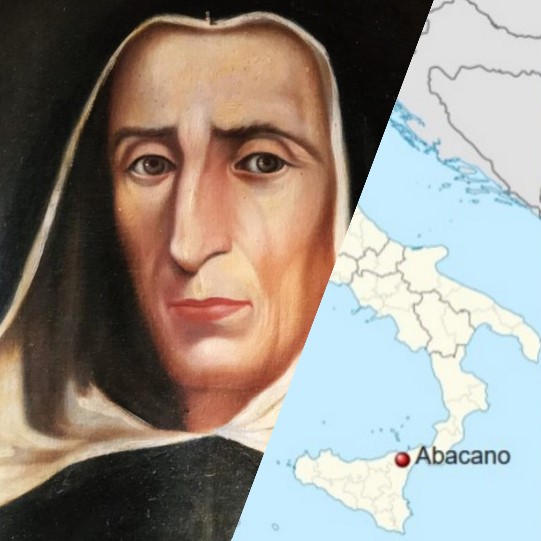
Tommaso Fazello and Abakainon on a map of Sicily.
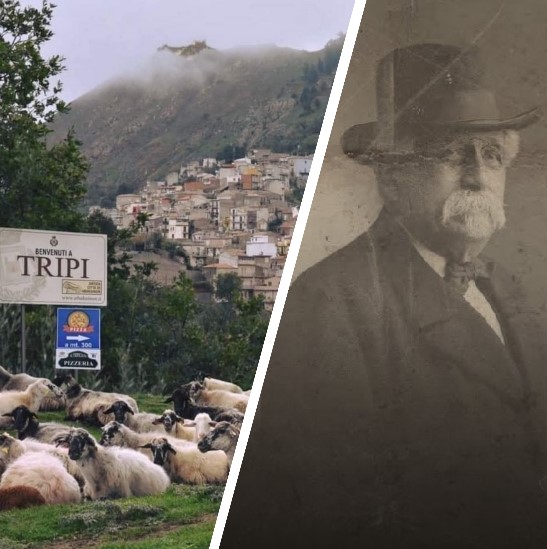
Tripi (Messina) is now a small village with just over 700 inhabitants, nestled between the Nebrodi and Peloritani mountains, and Antonio Salinas.
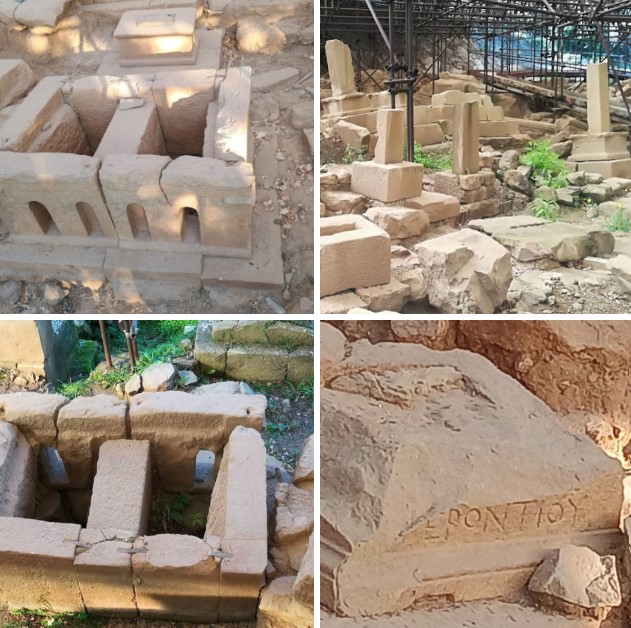
Sicilian-Greek Necropolis, 3rd-4th century BC.
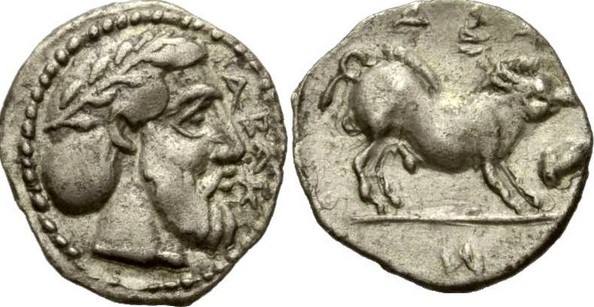
A coin of the ancient city of Abacaenum. Litra, ca. 440-435 BC; ABAK, laureate and bearded male head r., Rv. AI - NI (around), boar standing r.; below, acorn.
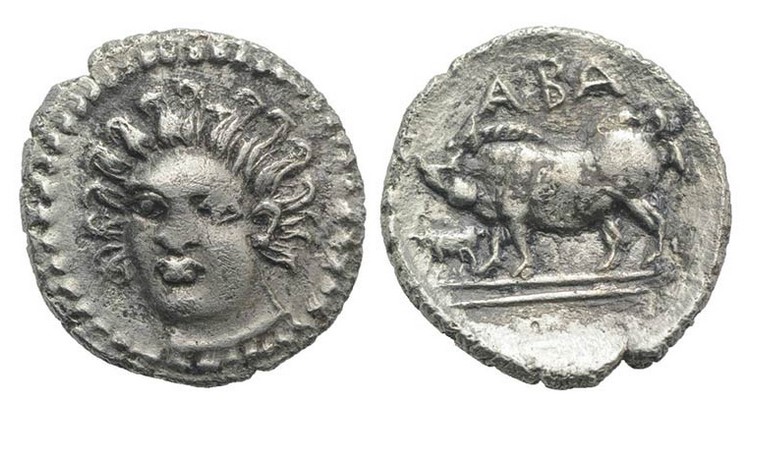
Sicily, Abakainon, c. 410-400 BC. AR Litra (10mm, 0.65g, 7h). Head of female facing slightly l. R/ Sow and piglet standing.
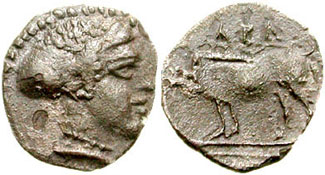
Sicily, Abakainon. Circa 465-392 BCE. AR Hemilitron (0.22 gm). Head of a nymph right, hair in ampyx and sphendone. Boar standing left.
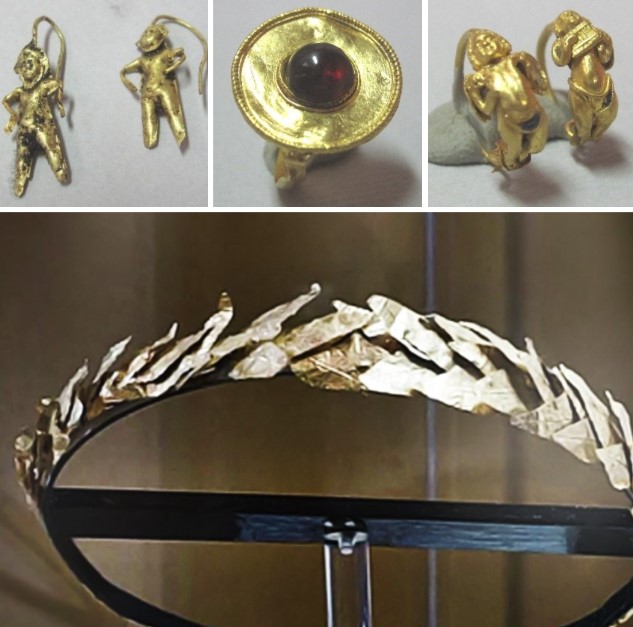
Archaeological finds found in Abakainon visible at the Santi Furnari Archaeological Museum, Via Francesco Todaro 152, Tripi.
Some gold objects belonging to the grave goods of the tombs (IVth - IInd century BCE). A curiosity: there are gold and silver mines in the province of Messina, which the ancient Siculi most likely knew about. Fazello (Deca I, p. 175, 1830) mentions that in his time, he could clearly see traces of ancient mines, and Dioscorides speaks of the gold and silver minerals of Sicily (Diosc, V, 102). The widespread presence of precious objects and artistic bronzes among the populations of Sicily throughout ancient times is evidenced by the riches (gold and silver objects) found in temples and sanctuaries, and by the valuable gifts that individuals and cities sent to the sanctuaries of Greece. To confirm this spread, there is a law from Diocles of Syracuse (407 BC) that prohibited women from wearing jewelry. The intent was to curb its excessive use, a sign of luxury habits that were certainly not limited to Syracuse. Timaios (in Diodorus VII, 81-94) recalls the rather Eastern-like opulence of Agrigento, whose inhabitants used precious metal oil jars and strigils. There are also records of gold and silver votive offerings, even in the smaller cities of the island. All these precious goods were partly made in well-known industrial workshops of the Greek world, but largely in the small workshops of Sicilian towns. Often, some of the jewelry donated to deities was intended for ritual purposes, and it is likely that, alongside the sanctuaries, the goldsmithing industry existed to produce these votive offerings.
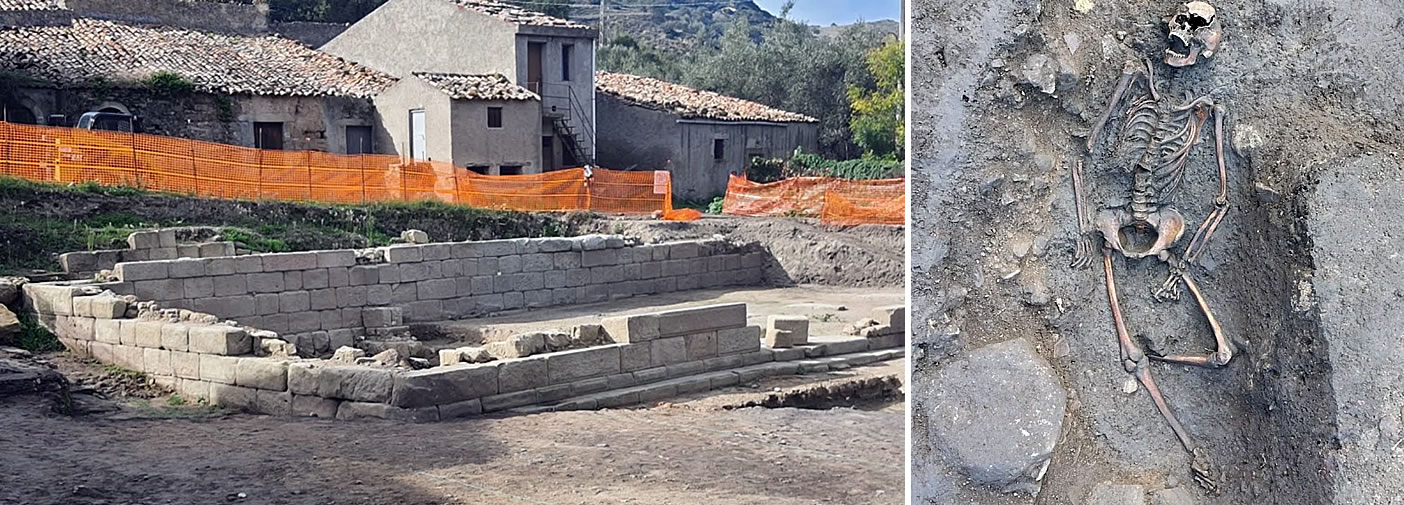
Abakainon: A porticoed stoa from the Hellenistic-Roman period, built with large double-curtain walls of squared ashlar blocks laid in isodomic courses, allowing the space to be identified as the city’s agora/forum. - A burial inhumation of an adult male, placed in an earthen pit; a pentanummium of Justinian I, a pierced bronze coin used as a pendant found near the ribs, dates the burial to between the second half of the sixth and the seventh century AD, when the area had already fallen out of use
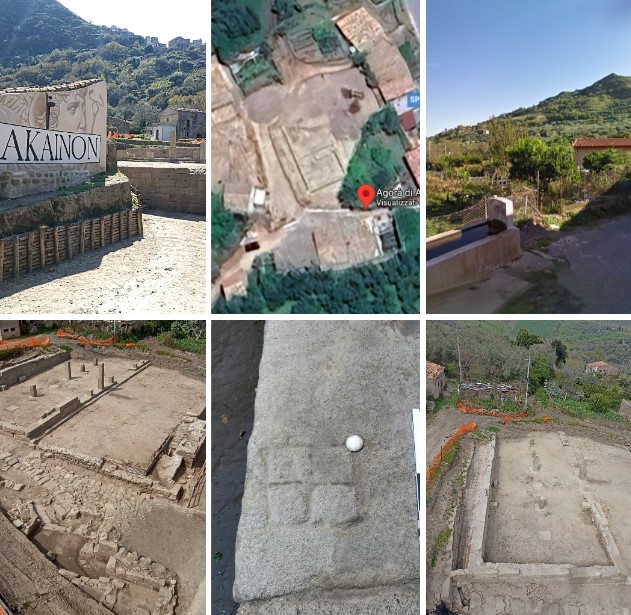
The stoà in Abakainon
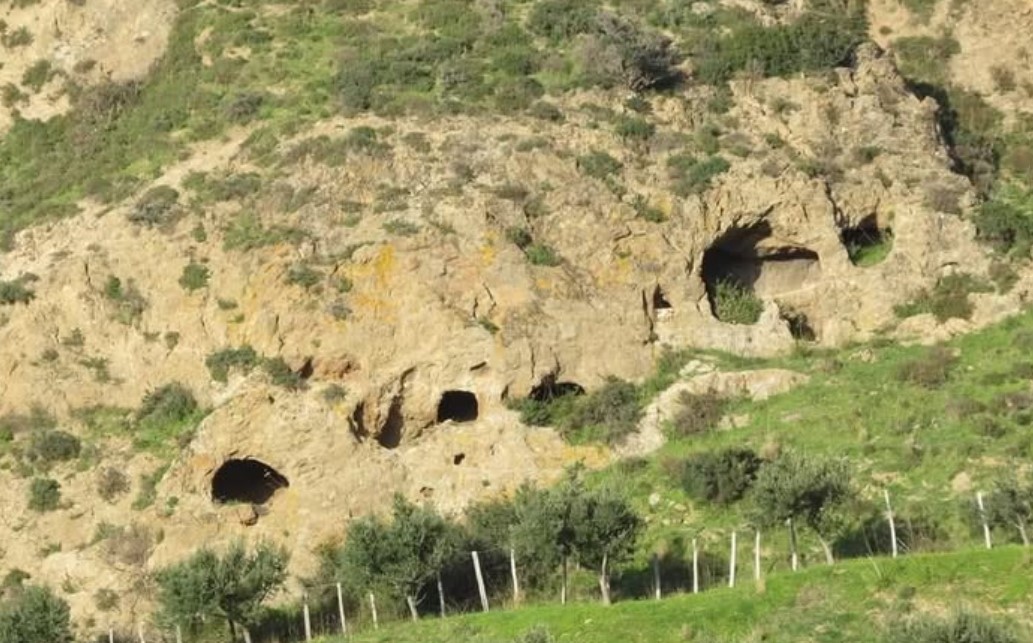
"I Purtusa" (holes) are located at the summit of the small hill known as "Pizzo Cisterna" and form a vast natural cistern that once collected rainwater to supply the Agora of the ancient city of Abakainon. They are situated 400 meters from the village of Casale and 800 meters from the town of Tripi.
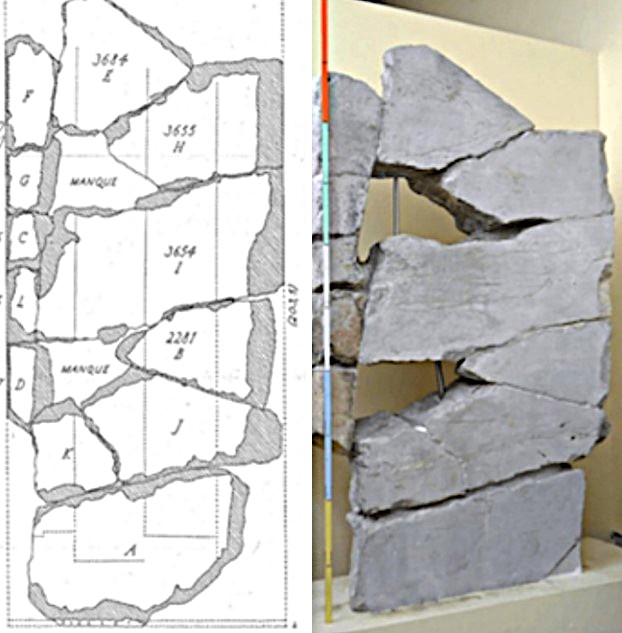
The Great Stele with the list of theorodokoi in the Archaeological Museum of Delphi records the last itinerary related to the itinerary of Magna Graecia and Sicily in the lower right corner of the front of the stele (fragments B-J-A).
In line 92, it is inscribed that the theoroi, having landed in Sicily at Messana, reached Abakainon.
These religious ambassadors were sent abroad to announce the recurrence of a Panhellenic festival, proclaim the sacred truce that enabled its celebration, and invite other communities to take part. Moreover, chosen as an official committee by a community invited to attend the periodic celebration of a Panhellenic festival, they traveled to foreign sanctuaries to represent their respective poleis at the festivals dedicated to the deities worshipped there. They would also attend the games and public sacrifices, dedicate offerings and burnt sacrifices to the god—both privately and on behalf of their homeland—and consult the oracle. The announcement of a festival by a polis thus required the appointment of several delegations composed of theoroi, who were then sent to all the Greek communities intended to be invited to the celebration. Each of these delegations was tasked with traveling through a specific region to deliver the invitation to the respective recipient communities. There, the theoroi had to present the purpose of their journey to the responsible authorities, formally submit the invitation, and then await their response. The itinerant nature of these missions (theoriai) created the issue of how to receive the sacred ambassadors, provide them with hospitality, and offer them assistance. Among the epigraphic documentation attesting to the presence and activities of the theorodokoi is a series of eight honorary lists inscribed on stelae, recording the names of these individuals entrusted with the duty of hosting the sacred ambassadors dispatched on missions from the major Panhellenic sanctuaries of the Greek world. These stelae thus feature a sequence of entries in which the names of the theorodokoi are inscribed alongside the locations where they exercised their role. The characteristics of these theorodokoi lists find clear expression in the so-called "Great List of Thearodokoi," the most extensive and significant of the eight epigraphic documents of this kind due to the wealth of information it contains. Of the eight surviving lists, this one belongs to the small group of three catalogs originating from Delphi, offering a comprehensive view of the full extent of the theoroi's travels from a great Panhellenic sanctuary across the Mediterranean basin.
View of the Tyrrhenian Sea from the highest part of Tripi (the Medieval Castle): the valleys of the Novara and Tallarita rivers are visible, along with the stretch of coastline between Milazzo and Tindari, extending to the Aeolian Islands. Behind the castle ruins lies Casale di Tripi.
The urban layout of Abakainon developed in Contrada Piano, in the present-day hamlet of Casale, north of the hill now dominated by the Medieval Castle (likely of Byzantine or Arab origin), which stands at the highest point of the ridge, serving as a watershed between the Tallarita and Mazzarrà streams. Thanks to its privileged position, the castle visually commanded the Tyrrhenian coast from Tindari to Milazzo, extending inland toward the mountains on one side and offering a view of the Aeolian Islands on the other.
© andmorestory.eu - All right reserved