The Argo Relief in Villa Albani
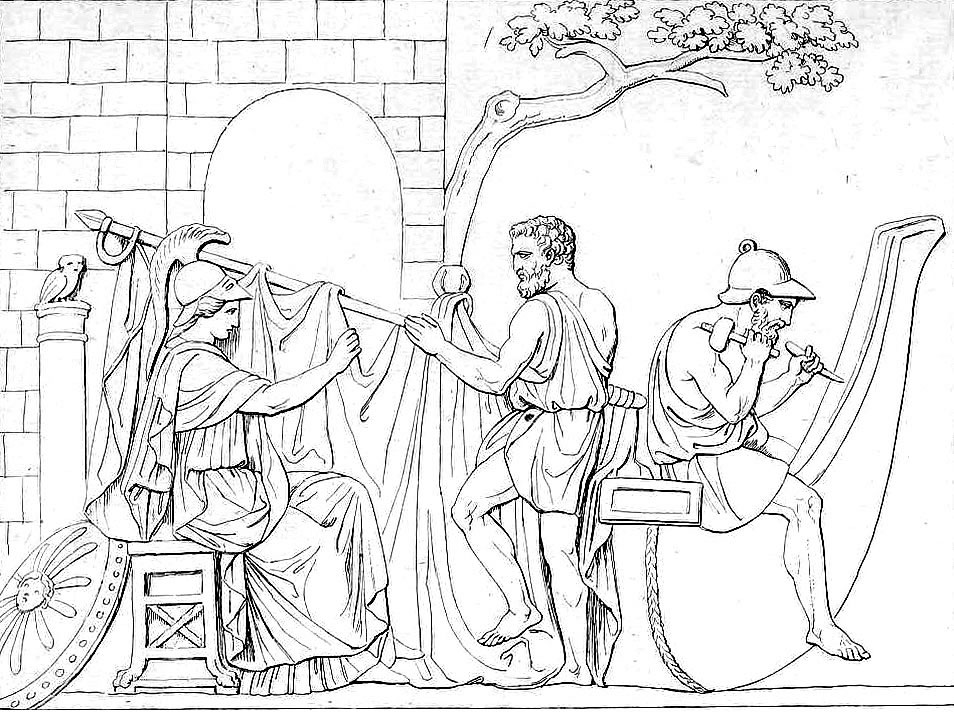
In the book Bassorilievi antichi di Roma (1808), engraved by Tommaso Piroli (1752–1824) and illustrated by Giorgio Zoeg (1755–1809), a drawing appears of the terracotta bas-relief known as the "Construction of the Ship Argo" (Volume I, page 210, Plate XLV).
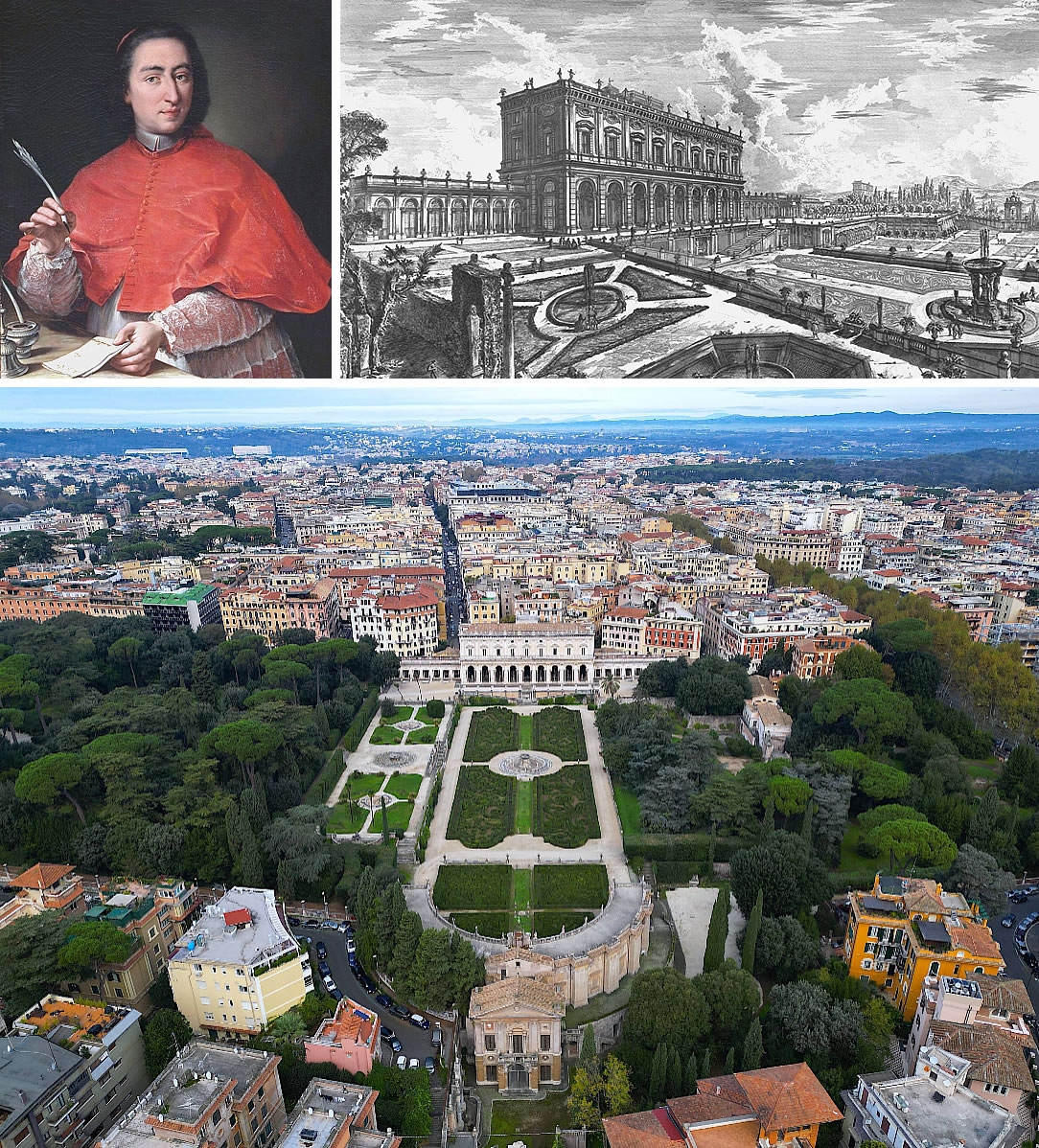
This ornament once belonged to the collection of Cardinal Alessandro Albani (1692–1779) and was kept in his magnificent, celebrated villa, which at the time stood in the Roman countryside along the Via Salaria, beyond the ancient gate of the same name. Built between 1747 and 1763, the villa was conceived as a showpiece—a venue for learned discussions, concerts, dances, and masquerades organized to delight the circle of antiquarian friends whom Albani gathered around himself. Indeed, the Cardinal was a famous patron, a noted collector of ancient sculpture in eighteenth-century Rome, and a promoter of that Neoclassical taste that also laid the foundations of modern archaeological studies. He was a friend of Winckelmann (1717–1768), whom he hosted for many years, and amassed rich collections of art and ancient artifacts.
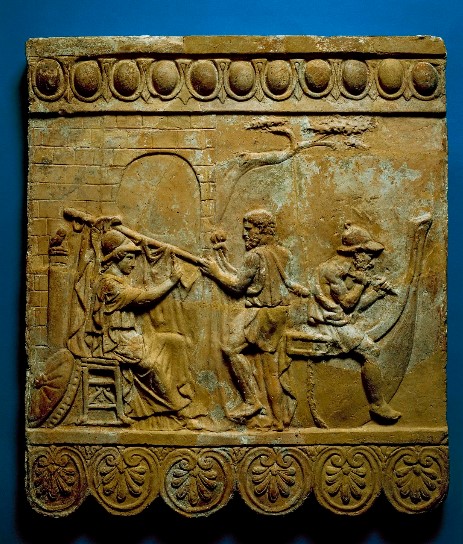
The bas-relief, together with two others, was discovered in the same excavation. One of these, now in the British Museum, is similar to a piece. In my opinion, they are identical, but the museum curator comments as follows:The bas-relief, together with two others, was discovered in the same excavation. One of these, now in the British Museum, is similar to a piece. In my opinion, they are identical, but the museum curator comments as follows:
This relief was found with many others, including an almost identical one (now at Villa Albani, Rome) at Porta Latina, just outside of Rome. That one, rather than the British Museum one, served as frontispiece to Winckelmann's Monumenti Antichi Inediti. A variant of this type is quite different, in that it does not have all the 'mistakes' present in this one, i.e. the the strange flowing of Athena's drapery, the awkward positioning of her legs, and the floating canvas above the left hand of the middle man. It is supposed that the latter is of an earlier date than the other.
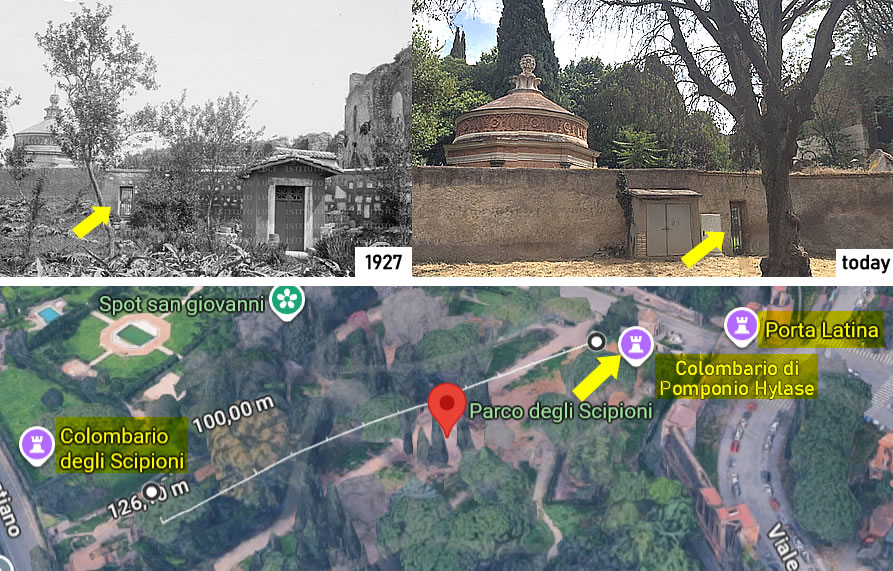
They had been set into the wall of a vineyard beyond the oratory of San Giovanni in Oleo and the stretch of the Aurelian Walls at the Porta Latina. Today, that wall forms the boundary of the Park of the Scipios, and at least until the early decades of the last century, its inner side was covered with archaeological fragments unearthed from the tombs and columbaria in the surrounding area.
The terracotta ornament depicts the ship Argo being built by the Argonauts using timber from the forest of Mount Pelion, which is suggested by the tree visible in the background. It shows Argos working on the ship, and another male figure, perhaps Tiphys, the pilot of the Argo, with Minerva teaching him how to attach some sails to a pole.
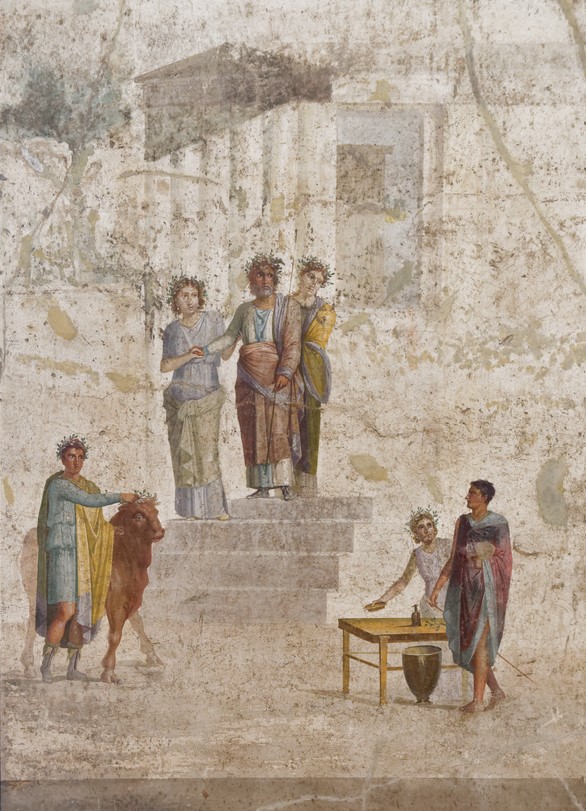
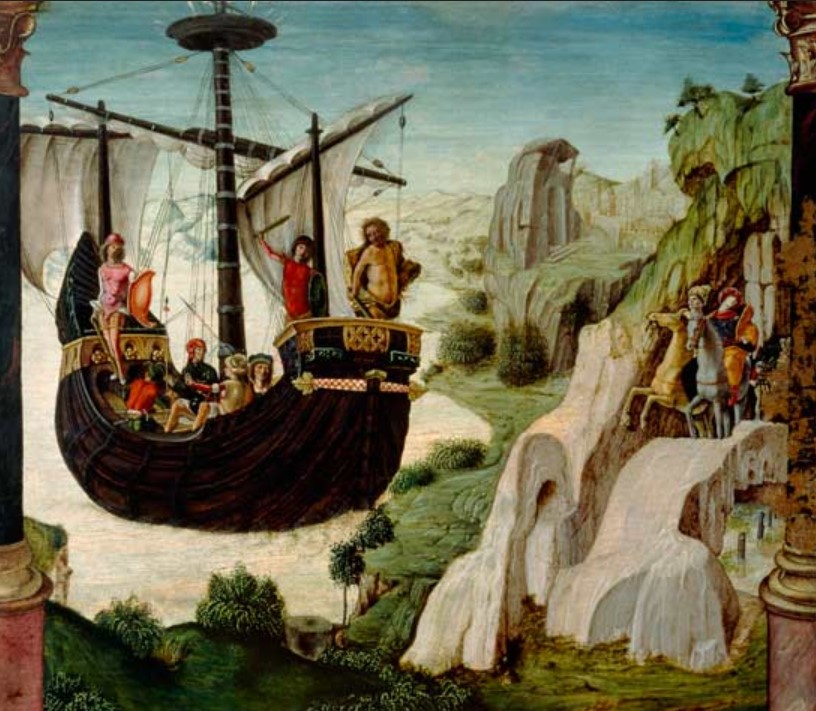
This subject belongs to Greek mythology and is connected to the story of Absyrtus and the legendary quest of the Argonauts. Absyrtus was the son of King Aeëtes of Colchis, an ancient region near the Black Sea. The Argonauts, led by Jason, ventured to Colchis to seize the Golden Fleece, a powerful and precious relic guarded by Aeëtes. The myth of Absyrtus reflects the dangers faced by the Argonauts and the moral complexities surrounding Jason's ambition and Medea's love and loyalty. The journey of Jason and the Argonauts from Greece to Colchis is one of the most famous tales in Greek mythology. The Argonauts, about fifty heroes including figures like Heracles, Orpheus, and Atalanta, traveled on the ship Argo to recover the Golden Fleece, which they believed was unjustly held by Aeëtes. Aeëtes, king of Colchis and son of the sun god Helios, had been entrusted with the Golden Fleece, a symbol of power and protection. However, Jason, determined to reclaim it, sought to prove his worth and complete his mission, setting off a chain of dramatic events.
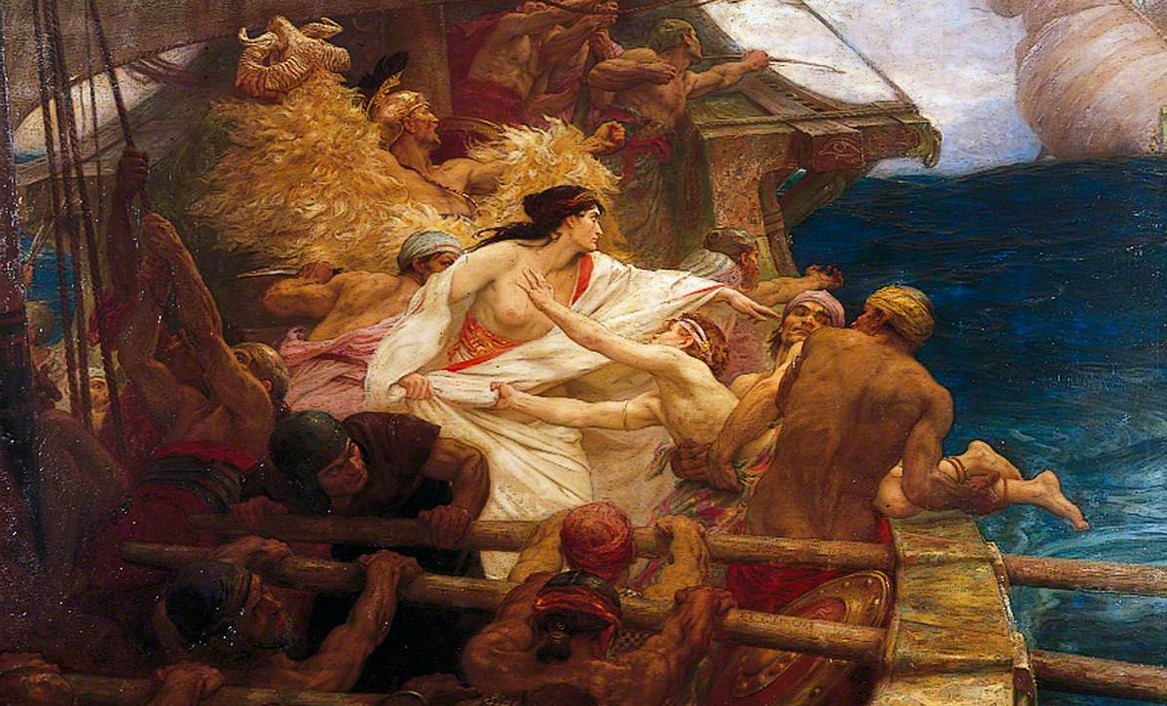
Medea, daughter of Aeëtes, was a powerful sorceress and priestess of Hecate. Enchanted by Jason, she defied her father and helped the Argonauts steal the Golden Fleece. To facilitate their escape, Medea took her younger brother, Absyrtus, with her. At this point, the myth diverges into several versions. In one story, Medea kills Absyrtus and scatters his remains in the sea to delay her father's pursuit. Shocked and grieving, Aeëtes stops to gather his son's remains, allowing the Argonauts to flee unhindered. In another version, Absyrtus is not a child but a young warrior sent by Aeëtes to stop Jason. Here, Medea deceives Absyrtus by pretending she has been taken against her will. Luring him to a secluded place, Medea allows Jason to ambush and kill Absyrtus, thus securing their escape. This act of betrayal underscores Medea's willingness to forsake her family for Jason but also highlights the brutality with which she defends her love.
The murder of Absyrtus is a turning point, bringing divine wrath. Zeus, disgusted by the atrocity, unleashes violent storms that batter the Argonauts. As the storm rages, the Argo itself—a vessel blessed by the gods—speaks to Jason and his crew, advising them to seek purification. They are directed to Circe, a powerful sorceress and relative of Medea, who lives on the island of Aeaea. Jason and the Argonauts navigate treacherous routes, including the Danube and its tributaries, to reach Circe. Along the way, they battle fierce dog-headed creatures and evade enemy ships. Once they reach Circe's island, she performs a ritual to purify them from the blood of Absyrtus, freeing them from divine condemnation. This episode highlights the ancient Greek belief in purification and the concept of miasma—spiritual pollution caused by acts of violence and betrayal.
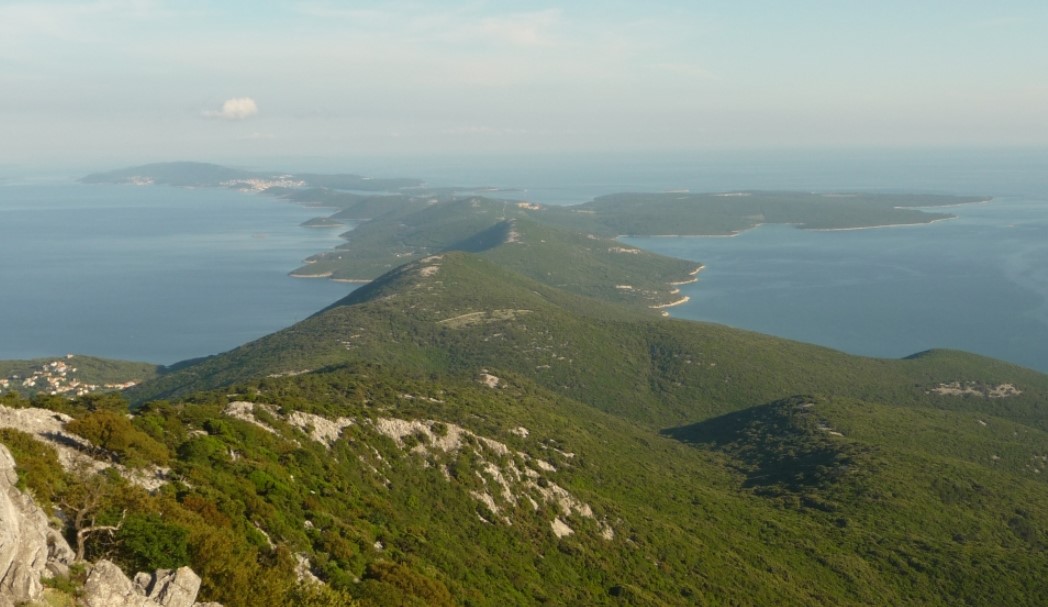
The role of Absyrtus in the myth varies across accounts. In Seneca's tragedy Medea , he is a small boy clinging to his sister, unaware of her plans to betray him. Here, Medea's ruthlessness shocks the audience, reinforcing her character as a figure who will stop at nothing to achieve her goals. Conversely, in Apollonius of Rhodes's epic Argonautica , Absyrtus is portrayed as a brave young man, loyal to his father and to Colchis, whose tragic death is part of the epic's complex moral landscape. The ancient Greek playwright Euripides offers another version, in which Absyrtus is a formidable adversary, challenging Jason in a battle of wits and strategy. This version gives Absyrtus a more active role, portraying him as a tragic hero who becomes a victim of Medea and Jason's relentless pursuit of their desires. In some interpretations, Absyrtus's death symbolizes the ultimate betrayal of family bonds, highlighting the tragic cost of Medea's alliance with Jason. Absolved of guilt, the Argonauts resume their return journey, but the route is full of challenges. Various accounts provide different versions of the return route, underscoring the mythic imagination surrounding their voyage. Some suggest they crossed the Adriatic Sea, while others propose they retraced their original path through the Bosporus and the Hellespont, aided by Heracles, who had recently defeated the Trojan forces. These fantastical routes reveal ancient storytellers' fascination with the vast, unknown world beyond Greek borders, crafting a journey rich in adventure and peril.
The myth of Absyrtus underscores key themes in Greek mythology, especially the conflict between family loyalty and personal ambition. Medea's betrayal of her brother represents an extreme sacrifice for love but also places her in a morally ambiguous light. The story of Absyrtus further explores the concept of retributive justice, with Zeus punishing the Argonauts for violating kinship ties. The journey to Circe for purification reflects the ancient Greek understanding of morality and divine law. In the Greek worldview, spilled blood—especially within families—caused spiritual pollution that required cleansing. Circe's ritual purification allowed the Argonauts to continue their journey, absolved of guilt, but their encounter with Circe also serves as a warning about the consequences of unchecked ambition and disregard for moral boundaries.
The tragic story of Absyrtus has captivated both ancient and modern audiences with its complex portrayal of heroism, loyalty, and moral compromise. Apollonius of Rhodes's Argonautica is one of the most detailed surviving accounts, capturing the epic scale and intricate character dynamics of the myth. Other works, such as Euripides' Medea and Seneca's Medea, adapt the story to explore different aspects of Medea's character and her relationship with Jason.
In some interpretations, the city of Tomis is said to derive its name from the Greek word "tomē," meaning "cut," symbolizing the dismemberment performed by Medea. This etymology connects the myth to a specific place, rooting its themes of violence and retribution in the geography of the ancient world.
This page was last edited on 21 March 2026