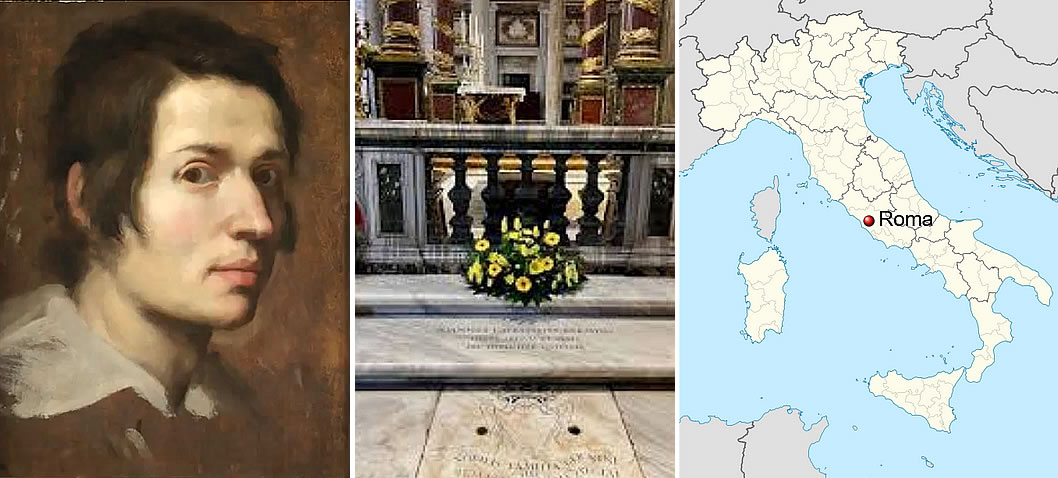
A young Gian Lorenzo Bernini and his tomb

This simple Latin epitaph expresses the hope of resurrection for Gian Lorenzo and his father Pietro, who had their workshop behind the Pauline Chapel of the Basilica of Santa Maria Maggiore, on Via Liberiana. To Bernini, who inspired so much admiration in illustrious persons and Romans, the Eternal City at that time paid no formal tribute. There was no street named after him, only a small alley near Piazza San Silvestro called 'del Bernini', but even that has disappeared today.
On the house near Piazza Santo Andrea delle Fratte, a modest plaque with this inscription was mounted in 1898:
HERE LIVED AND DIED
GIAN LORENZO BERNINI
BEFORE WHOM BOWED REVERENTLY
POPES, PRINCES, AND PEOPLES
Upon his death, Bernini left annual donations to a poor and good spinster chosen at random; to his domestic collaborators; to some nuns, including a niece of his; to a nephew who was a priest and who assisted him on his deathbed; to the church of Santi Quattro (where the sculptors' guild was based) so that a Mass would be celebrated each year for all the deceased members of his family; a small amount of money to his daughters because they had already received a generous inheritance from their mother; to his brother Luigi, the portrait of the King of England executed by Van Dyck; while to his old friend and son-in-law Antonio di Filippo, a painting of his choice from among the many in the house; all the rest (movable and immovable property, gold and silver coins), after deducting debts and legal expenses, to his son Paolo (the second-born son invested with the rights of primogeniture) and in case there were no male descendants, it was to pass to the third-born son Francesco, then to Domenico, provided the sons did not become priests, otherwise everything would go to the benefit of the spinsters identified by the institution of the Santissima Annunziata. In addition to all this, Bernini left 400,000 scudi to his great friend Queen Christina of Sweden (1626-1689). At that time, she resided in Rome, and when the prelate went to give her the news, she replied: If he had served me, I would be ashamed that he had left so little.
Evidently, this sum seemed like a trifle to her. What she truly appreciated was the statue of 'Truth Unveiled by Time' made by Bernini, which was located in the artist's home studio. The queen often went to observe and praise it. One day a Cardinal said to her: — Your Majesty is the first among crowned heads who likes the truth.” She replied: “But not all truths are made of marble.
Bernini executed the work between 1645 and 1652, during a difficult period in his career, coinciding with the election to the papal throne of Innocent X Pamphili (1644-1655), who preferred the architect Francesco Borromini (1599-1667) to him. The artist intended to show Truth represented allegorically as a naked young woman having her veils removed by the figure of Time above her, but this second allegory was never executed. Bernini had expressed his intention to add the figure in 1665, but he ultimately never completed the work.
In his will, Bernini left the sculpture in perpetuity to the firstborn of his family, although Cardinal Mazarin had wanted to buy it.
From Bernini's studio on Via della Mercede; in 1852 it was transferred to the palace of his descendants on Via del Corso, where it was displayed on an inclined stucco block. It remained there until 1924, then passed to the Galleria Borghese, and in 1956 was purchased permanently by the Italian State.
This simple Latin epitaph expresses the hope of resurrection for Gian Lorenzo and his father Pietro, who had their workshop behind the Pauline Chapel of the Basilica of Santa Maria Maggiore, on Via Liberiana. To Bernini, who inspired so much admiration in illustrious persons and Romans, the Eternal City at that time paid no formal tribute. There was no street named after him, only a small alley near Piazza San Silvestro called 'del Bernini', but even that has disappeared today.
On the house near Piazza Santo Andrea delle Fratte, a modest plaque with this inscription was mounted in 1898:
HERE LIVED AND DIED
GIAN LORENZO BERNINI
BEFORE WHOM BOWED REVERENTLY
POPES, PRINCES, AND PEOPLES
Upon his death, Bernini left annual donations to a poor and good spinster chosen at random; to his domestic collaborators; to some nuns, including a niece of his; to a nephew who was a priest and who assisted him on his deathbed; to the church of Santi Quattro (where the sculptors' guild was based) so that a Mass would be celebrated each year for all the deceased members of his family; a small amount of money to his daughters because they had already received a generous inheritance from their mother; to his brother Luigi, the portrait of the King of England executed by Van Dyck; while to his old friend and son-in-law Antonio di Filippo, a painting of his choice from among the many in the house; all the rest (movable and immovable property, gold and silver coins), after deducting debts and legal expenses, to his son Paolo (the second-born son invested with the rights of primogeniture) and in case there were no male descendants, it was to pass to the third-born son Francesco, then to Domenico, provided the sons did not become priests, otherwise everything would go to the benefit of the spinsters identified by the institution of the Santissima Annunziata. In addition to all this, Bernini left 400,000 scudi to his great friend Queen Christina of Sweden (1626-1689). At that time, she resided in Rome, and when the prelate went to give her the news, she replied: If he had served me, I would be ashamed that he had left so little.
Evidently, this sum seemed like a trifle to her. What she truly appreciated was the statue of 'Truth Unveiled by Time' made by Bernini, which was located in the artist's home studio. The queen often went to observe and praise it. One day a Cardinal said to her: — Your Majesty is the first among crowned heads who likes the truth.” She replied: “But not all truths are made of marble.
Bernini executed the work between 1645 and 1652, during a difficult period in his career, coinciding with the election to the papal throne of Innocent X Pamphili (1644-1655), who preferred the architect Francesco Borromini (1599-1667) to him. The artist intended to show Truth represented allegorically as a naked young woman having her veils removed by the figure of Time above her, but this second allegory was never executed. Bernini had expressed his intention to add the figure in 1665, but he ultimately never completed the work.
In his will, Bernini left the sculpture in perpetuity to the firstborn of his family, although Cardinal Mazarin had wanted to buy it.
From Bernini's studio on Via della Mercede; in 1852 it was transferred to the palace of his descendants on Via del Corso, where it was displayed on an inclined stucco block. It remained there until 1924, then passed to the Galleria Borghese, and in 1956 was purchased permanently by the Italian State.
This page was last edited on 21 March 2026
A young Gian Lorenzo Bernini and his tomb
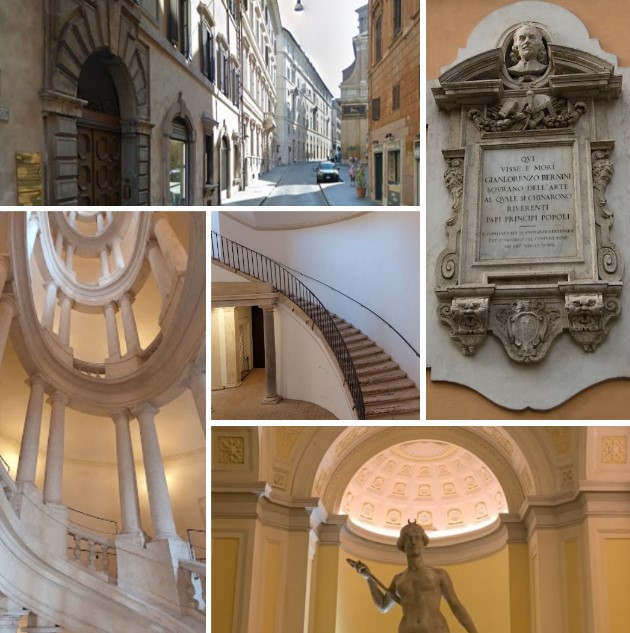
Photo of the Bernini Palace and its interior at Via Mercede 11 (with the church of S. Andrea delle Fratte visible in the background), and a late 19th-century commemorative plaque at number 12A.
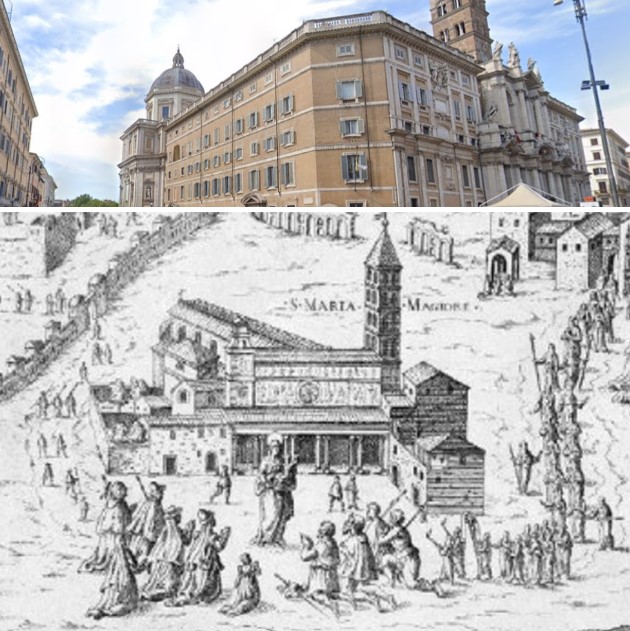
View of Santa Maria Maggiore in the 17th century, and today (left: Via Liberiana with a view of the Pauline Chapel; right: the piazza with the entrance to the basilica).
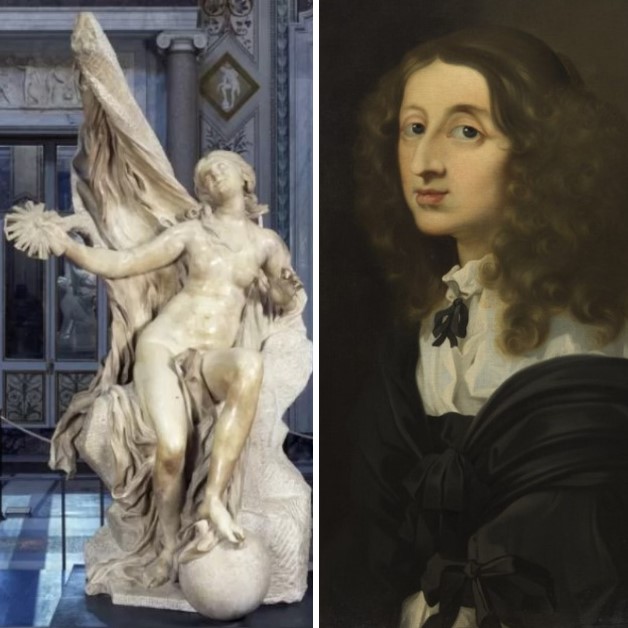
Sébastien Bourdon, Portrait of Christina of Sweden, 1652-1657, Stockholm, National Museum and, Truth Unveiled by Time (1645-52) by Gian Lorenzo Bernini, Galleria Borghese, Rome. The young girl, seated on a rocky mass, holds the sun in her right hand and rests her left leg on the terrestrial globe, according to an iconography already canonized in the famous Iconologia by Cesare Ripa (1600)
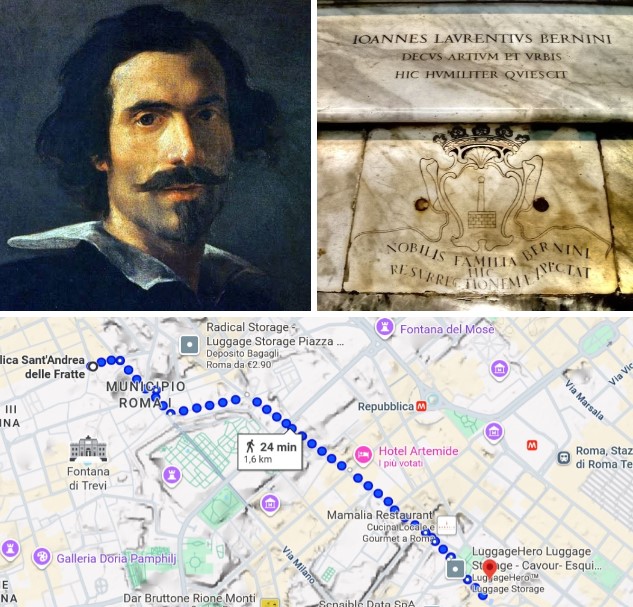
Portrait of Gian Lorenzo Bernini, the family tomb inside the Basilica of Santa Maria Maggiore, and the plaque.
© andmorestory.eu - All right reserved