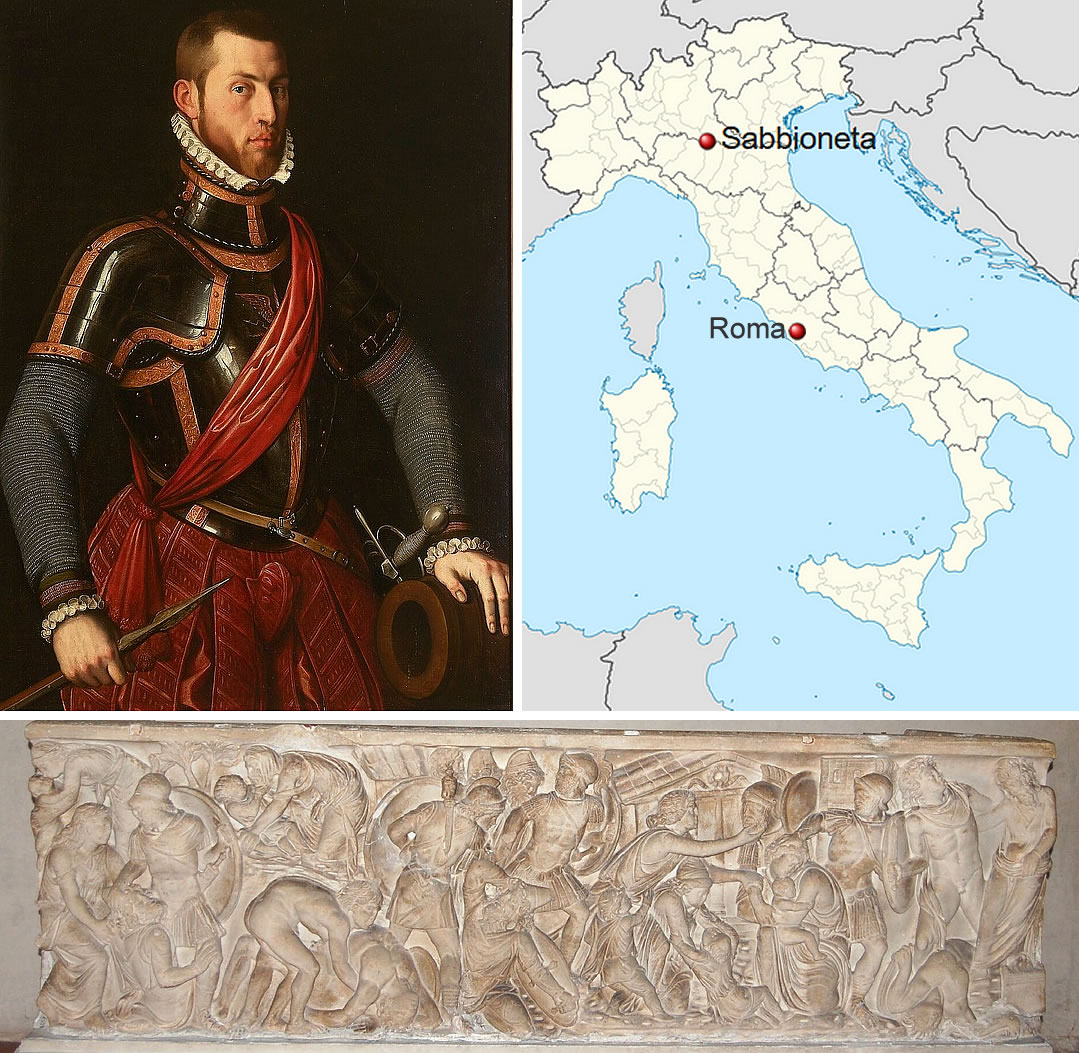
Portrait of Vespasiano I Gonzaga (1531–1591), by Bernardino Campi (1520–1591), 1559, Pinacoteca Civica, Como - Sabbioneta (Mantua, Italy) - The famous sarcophagus known as 'The Sack of Troy'

In Greek mythology, a bloody war was fought between the Achaeans and the powerful city of Troy, presumably around 1250 BCE or, according to other sources, between 1194 and 1184 BCE, in Asia Minor. The events of this conflict are known primarily through the epic poems Iliad and Odyssey, attributed to Homer and composed around the 9th century BCE. Both narrate only a small part of the war: the Iliad describes the events that took place during the final year of hostilities, while the Odyssey, besides recounting Odysseus's journey back to Ithaca, also tells of the conquest of Troy. The other works of the so-called "Epic Cycle" have been lost and are known to us only through later testimonies. Individual episodes of the war, however, are described in countless texts of Greek and Latin literature and depicted in just as many works of art, both painted and sculpted.
Among the latter stands out the famous sarcophagus known as 'The Sack of Troy', now housed in the Ducal Palace of Mantua. It originally belonged to the collection of Vespasiano Gonzaga (1531-1591), an Italian commander, politician, and patron of the arts, as well as the founder, creator, and only duke of the ideal city of Sabbioneta. Located in the Lower Po Valley, between Mantua and Parma, Sabbioneta was built by Vespasiano over the course of about thirty-five years, from 1556 until his death, following the canons and criteria of the finest Italian Renaissance. Roma quanta fuit ipsa ruina docet
(How great Rome was, its very ruin teaches): this is the inscription that stands out on the Teatro all'Antica in the town, which the duke wanted to rebuild as a new Rome. To this end, he amassed from scratch a vast collection of antiquities – including the Roman bas-relief depicting the fall of Troy – which was displayed in the Galleria degli Antichi (also known as the "Corridor Grande") in Sabbioneta. 97 meters long, it is placed in length after the Gallery of Geographical Maps in the Vatican Palaces and the Uffizi Gallery in Florence. The gallery was built between 1584 and 1586 by Vespasiano Gonzaga himself, with the intention of housing the works of art he so loved. Only distinguished guests had the privilege of walking among these masterpieces, the proud symbol of the duke's magnificence. Vespasiano's archaeological collection consisted mostly of ancient marbles purchased from collectors and entrepreneurs in Rome and Venice upon his return from a trip to Spain. It remained as he had conceived it until 1773, when an Austrian decree ordered its transfer to the Palazzo dell'Accademia in Mantua. Finally, in 1915, the Academy ceded the collection to the Municipality of Mantua, which deposited it in the halls of the Ducal Palace.
The bas-relief in question was part of an ancient Roman sarcophagus dating back to the last quarter of the 2nd century CE. Its exact provenance is unknown, but stylistically it is an eclectic work that recalls, in various parts, many classical motifs. Several stylistic variations can be observed in the details of the reliefs, both on the front and on the sides: the artist was unable to guide his hand with the purity of style, grace, and beauty of the original sculpture he was imitating or copying. We therefore deduce that the work was produced by an artisan workshop operating within the sphere of funerary art.
The relief scenes unfold on three marble slabs that form the front and sides of the sarcophagus.
Front: The reading goes from right to left. At the far end, near the altar of Zeus Herkeios, a young man with a shield and cloak (Neoptolemus) drags an old man (Priam) by the hair, who extends his right hand in supplication. At their feet lies the body of a naked youth still holding his shield. Further on, a warrior in cuirass and helmet attacks a mother clutching her little son (perhaps Andromache and Astyanax). Another woman, followed by a child, seeks pity by touching the beard of another warrior with helmet and shield. In the center of this group, a third woman bends to the ground to lift a child. In the background, a temple with a mask on its pediment and, a little further on, a tower are visible. Then a warrior seen from behind, with a large shield, strikes a kneeling Trojan with his sword, who tries to defend himself by raising his right arm. Behind, a Greek in cuirass and helmet drags three Trojan prisoners. Next, a naked youth supports the body of a dead companion. In the background, on a raised area, an old nurse kneels beside a child lying under a tree. Below, a Greek warrior seizes the hair of a fallen Trojan who clings to his attacker's leg, while behind him a disheveled woman tries to help him. In the far upper corner, a mother lifts and kisses a child, whose right foot appears on the left side of the sarcophagus.
Left Side: In the center, a naked Achilles, with a chlamys, shield, and spear, grabs a youth (Troilus) by the hair as he is about to fall from a rearing horse, though he still holds his shield. Behind Achilles, another warrior with a shield is about to draw his sword; between these two figures is a bearded man in a short chiton, rendered in very low relief. Also in the background, in low relief, an unarmed Trojan stretches out his arms towards Achilles in supplication.
Right Side: Two summarily rendered small pilasters frame the scene. In the center sits a woman on a rock, her head veiled and wrapped in a chiton and cloak (perhaps Andromache), weeping. Before her are two young men in chitons, cloaks, and diadems on their heads, in sorrowful attitudes; behind her is an elderly woman with the typical nurse's cap. In the upper left corner, the Palladium is depicted in very low relief. The sarcophagus is important for the rarity of the subject it represents.
In the Homeric poems, the term "Achaeans" (Greek Akhaioí) refers broadly to all Greeks. However, the Homeric epic offers a distorted and imaginative representation of the Achaean world, which is not so much a faithful memory of their civilization as an amalgam of elements from the Mycenaean past and traits of the poets' contemporary society. In the Iliad, the Achaeans are the Greek peoples who took part in the Trojan War. Homer uses the terms "Achaeans" and "Danaans" interchangeably, while "Argives" seems to refer more specifically to the inhabitants of the Peloponnese or mainland Greece. The term "Hellenes" is used only for the inhabitants of northern Greece.
In historical times, the name "Achaeans" was applied to the inhabitants of Phthiotic Achaea (southern Thessaly) and Aegialean Achaea (northern Peloponnese), both of Dorian descent. The Achaeans were one of the four main tribes into which Herodotus divided the Greeks, along with the Aeolians, Ionians, and Dorians. Modern reconstructions, based on ancient historical traditions, suggest that the Achaeans were the first Hellenic population to invade Greece in the 2nd millennium BCE, succeeding in definitively dominating the pre-Hellenic peoples, often identified with the Pelasgians. The Achaeans were also called Argives (from the city of Argos) and Danaans, meaning "sons of Danaus" and thus "Westerners," in contrast to the "Eastern" Trojans. These Indo-European peoples entered Greece through the Balkans, occupying the Peloponnese around 1500 BCE, coinciding with the decline of the Minoan civilization. They were probably the ultimate cause of the Minoans' fall, but they also absorbed many influences from them, giving rise to the flourishing Mycenaean civilization. The Achaeans expanded throughout the Peloponnese, the Greek islands, and other regions of the country: therefore, simply identifying the Achaeans with the Mycenaeans would be imprecise.
Their importance is confirmed by Hittite and Egyptian records (1400–1200 BCE), where they are called Ahhijawa and Ekwesh, respectively. Around 1450 BCE, the Achaeans established their dominion over Minoan Crete through military expeditions and piracy, also expanding towards the southern Cyclades, Rhodes, Cyprus, and the coasts of Asia Minor. In the 13th century BCE, they pushed towards the Black Sea, launching a military expedition against Troy. The decline of the Mycenaean civilization seems to have begun with the Trojan War itself around 1200 BCE, and the subsequent Dorian invasion, about a century later, delivered the final blow.
According to the foundation myth codified by Hesiod, the name of the Achaeans derives from their mythical ancestor Achaeus, son of Xuthus and brother of Ion (founder of the Ionian tribe). Xuthus was in turn the son of Hellen, the legendary progenitor of the Greek (Hellenic) nation. Hellen had Dorus, Xuthus, and Aeolus by the nymph Orseis. He named the Greek peoples Hellenes after himself and divided the country among his sons: Xuthus received the Peloponnese, where he fathered Achaeus and Ion by Creusa, daughter of Erechtheus; from Achaeus and Ion, the Achaeans and Ionians respectively took their names. Dorus received the territory opposite the Peloponnese and called the settlers Dorians, while Aeolus reigned over Thessaly and gave his name to the Aeolians.
Both Herodotus and Pausanias recount the legend that the Achaeans of the classical period originally lived in Argolis and Laconia but were driven from these lands by the Dorians during the legendary Dorian invasion of the Peloponnese. Consequently, the Achaeans moved to the region known as Aegialus, expelling the Aegialians (who became known as Ionians). The Ionians sought temporary refuge in Athens, and Aegialus was renamed Achaea. Pausanias explains that the name "Achaeans" initially referred to the Greeks living in Argolis and Laconia because they were descendants of the mythical sons of Achaeus, Archander and Architeles. Achaeus, originally an inhabitant of Attica (where his father had settled after being exiled from Thessaly), later returned to Thessaly to reclaim his lands; it was from there that Archander and Architeles migrated to the Peloponnese. This connection explains why an ancient part of Thessaly was also known as Phthiotic Achaea.
This page was last edited on 17 April 2026
Portrait of Vespasiano I Gonzaga (1531–1591), by Bernardino Campi (1520–1591), 1559, Pinacoteca Civica, Como - Sabbioneta (Mantua, Italy) - The famous sarcophagus known as 'The Sack of Troy'
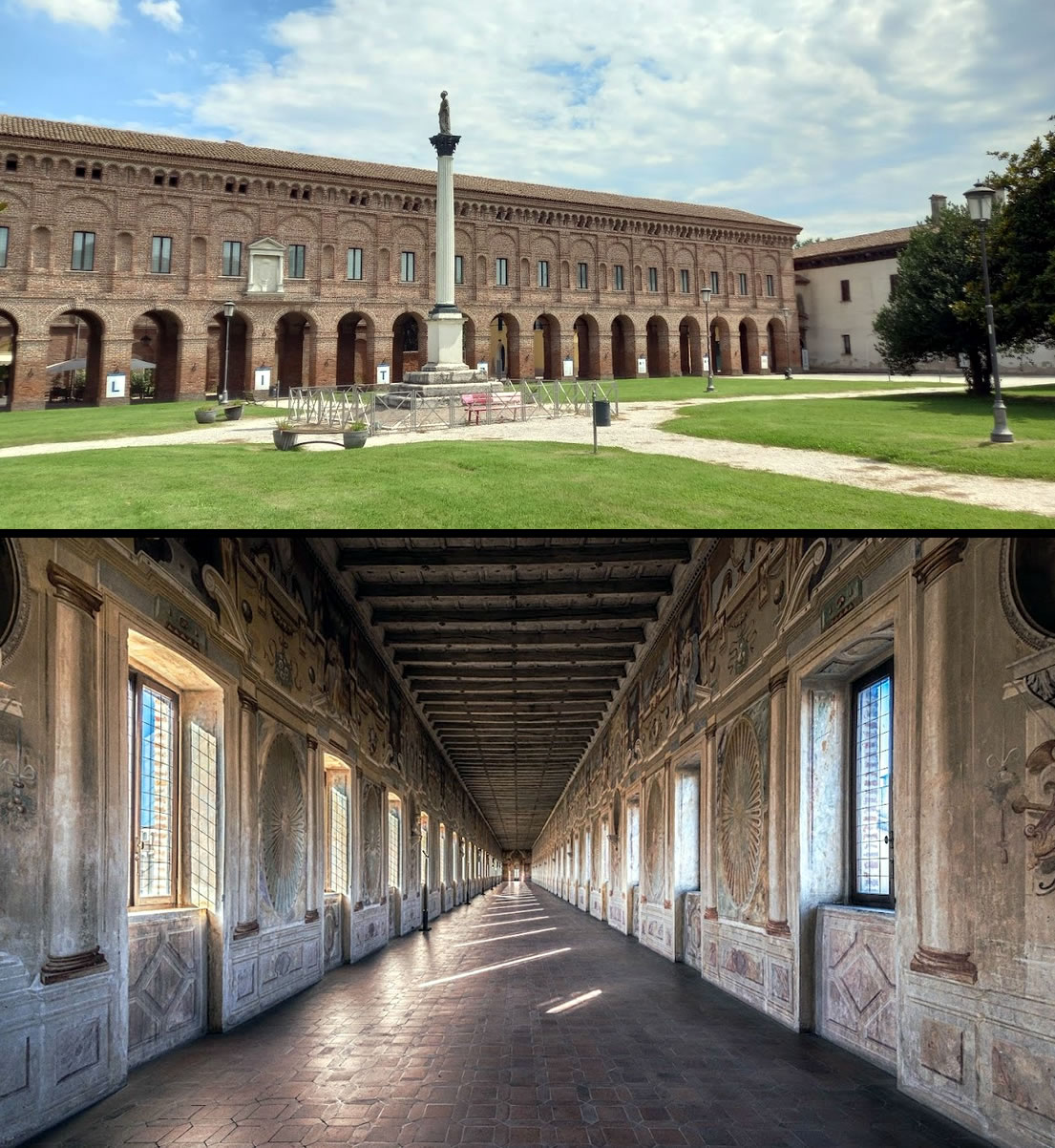
The 'Galleria degli Antichi' in Sabbioneta (Mantua, Italy)
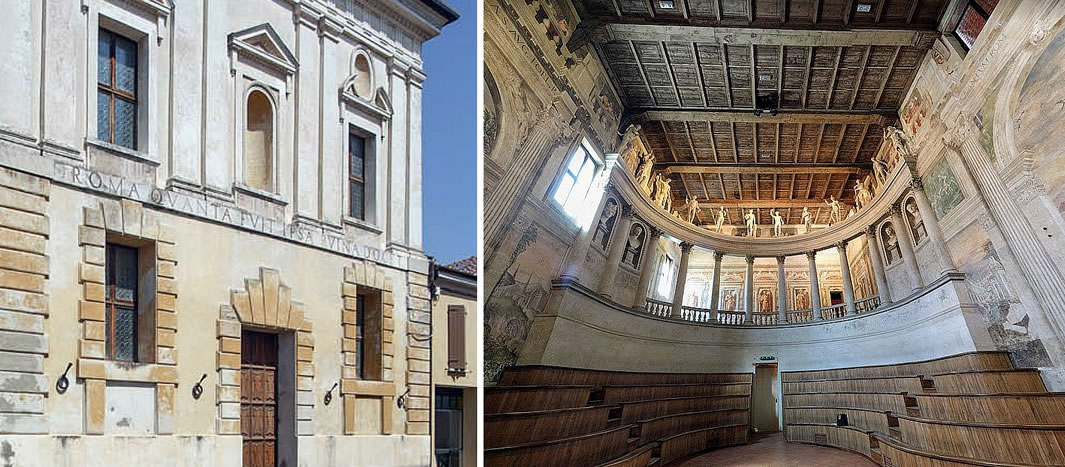
Roma quanta fuit ipsa ruina docet (How great Rome was, its very ruin teaches), the inscription that stands out on the Teatro all'Antica in Sabbioneta (Mantua, Italy)
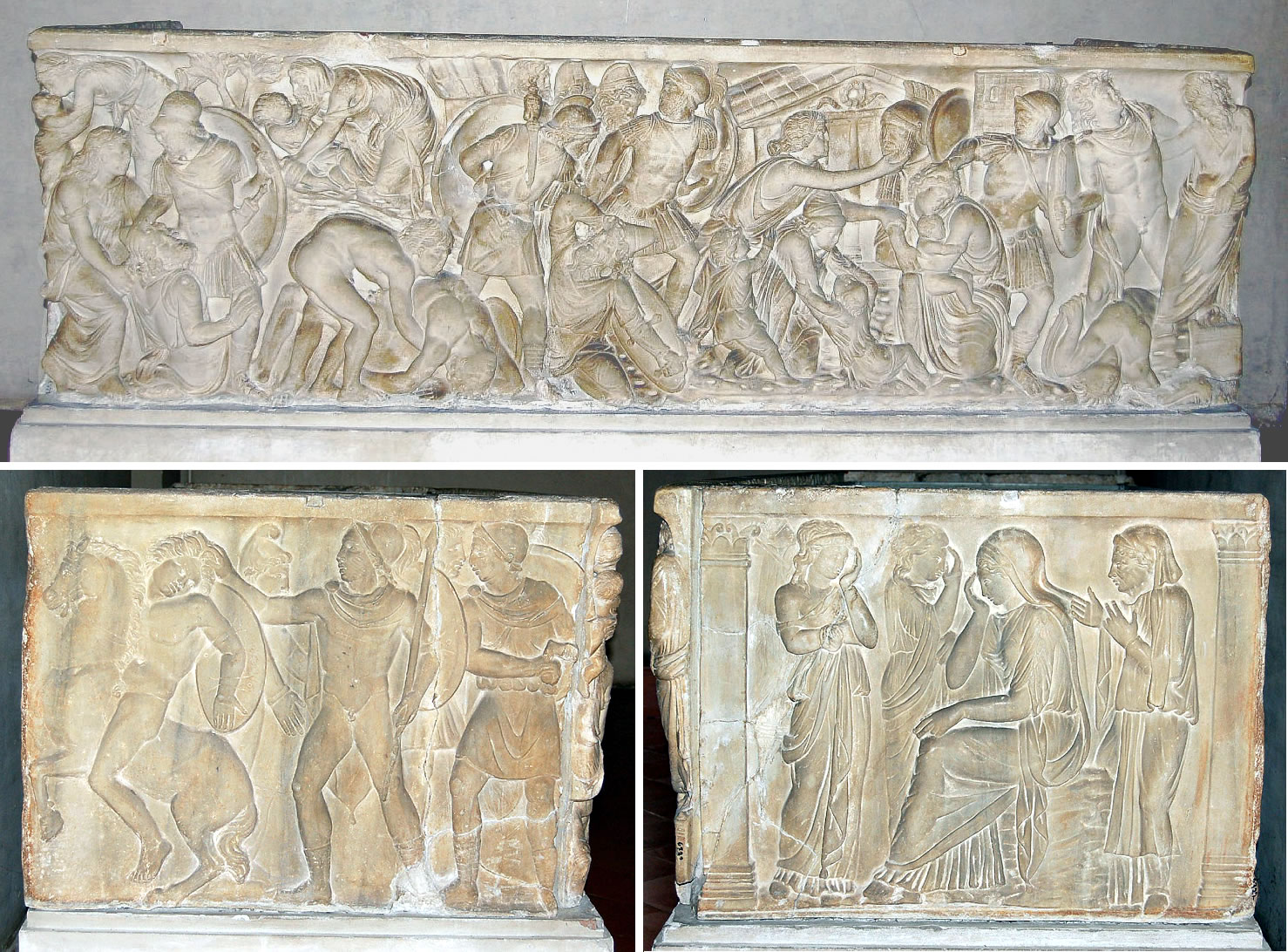
Sides of the famous sarcophagus known as 'The Sack of Troy'
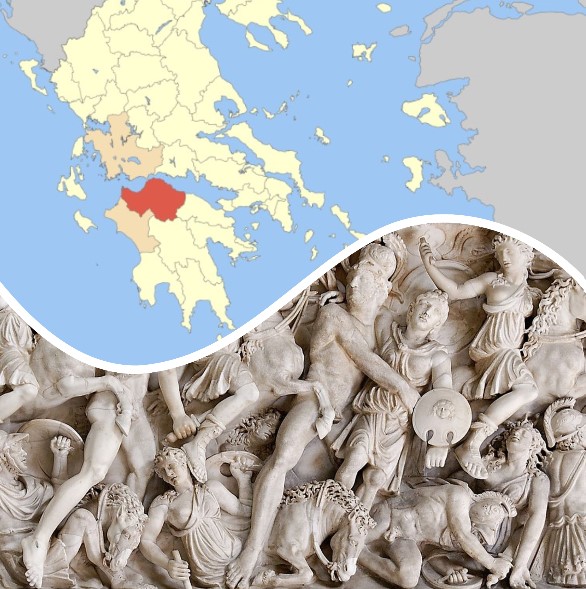
Map of Classical Achaea
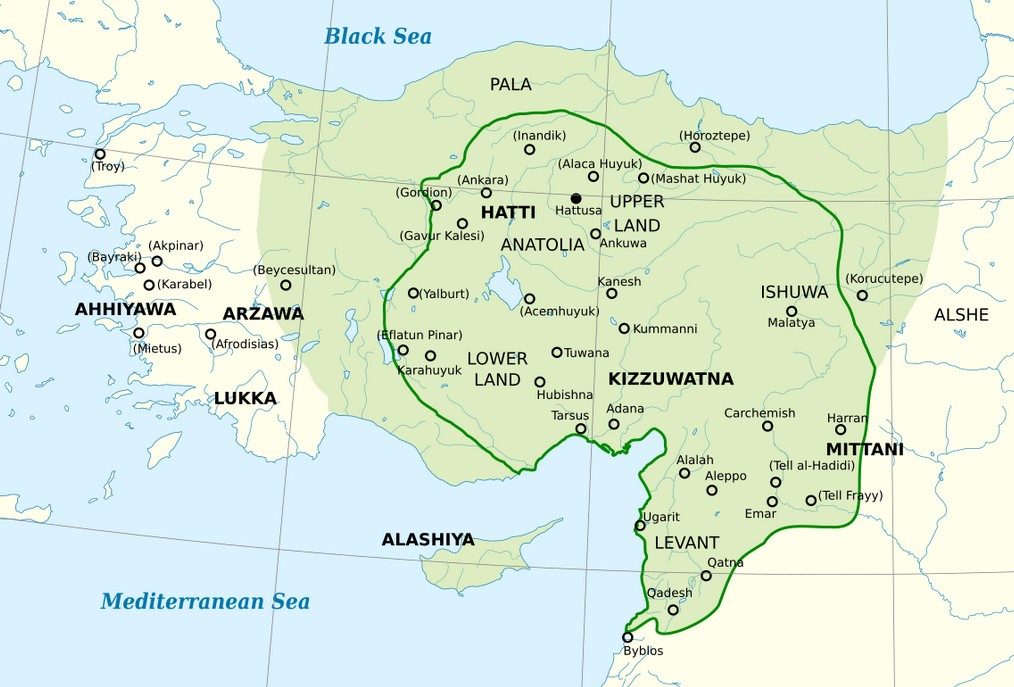
Map showing the Hittite Empire, Ahhiyawa (Achaeans) and Wilusa (Troy) in c. 1300 BCE.
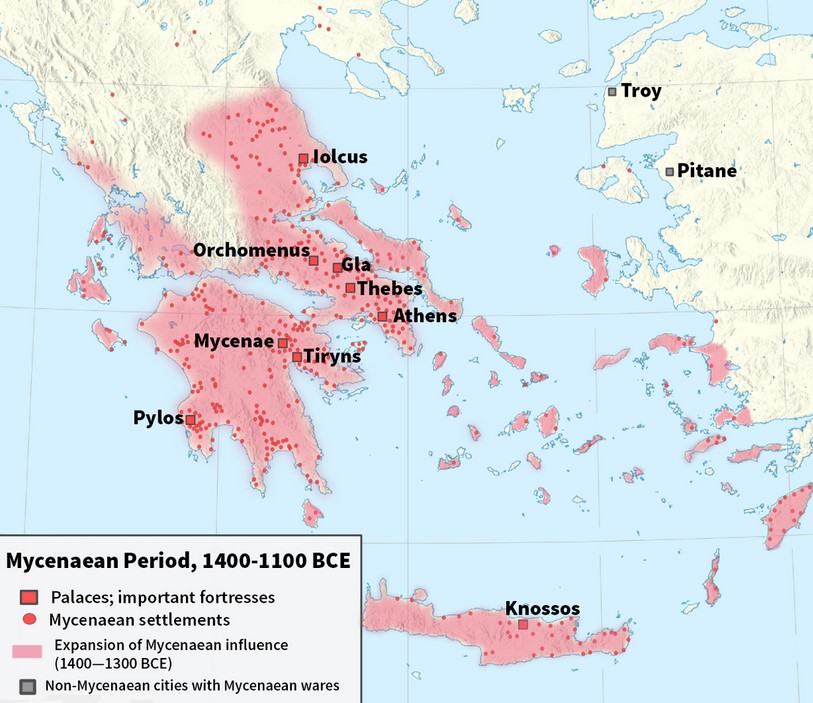
Map of Mycenaean cultural areas, 1400–1100 BC (unearthed sites in red dots).
© andmorestory.eu - All right reserved