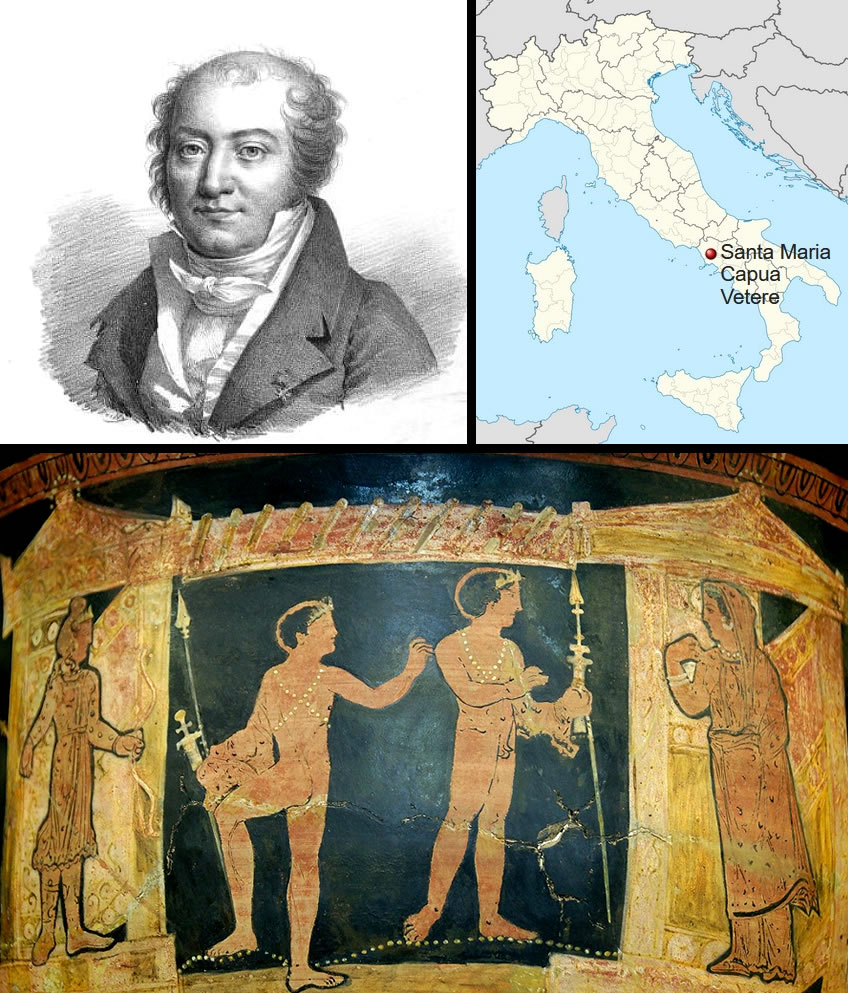
Joseph-François Tochon (1772–1820)

Joseph-François Tochon (1772–1820) – also known as Tochon d'Annecy or Tôchon d'Anneci – was a numismatist, a collector specializing in antiquities, and a politician. At twenty, he earned his doctorate in law from the University of Turin, but six years later he discovered his true calling: antiquity. He decided to move to Italy for two years, where he assembled a splendid collection of bronzes, medals, and ancient ceramics.
In 1817, three years before his death, Tochon sold his collections to the French state, which transferred them to the Louvre Museum. Among these artifacts is a vase, currently not on display, that arrived at the museum in 1818. It is a red-figure bell krater, dating from 330–320 BCE. The museum records indicate it was found in Capua, but it is unclear whether this refers to ancient Capua (modern-day Santa Maria Capua Vetere, until 1806 a hamlet of Capua) or to Casilinum (present-day Capua).
Casilinum was a small settlement that arose as a river port along the banks of the Volturno River in ancient Capua, surrounded on three sides by the river. It was a modestly sized inhabited center, strategically located near the bridge of the Via Appia over the Volturno, as well as the junction between the Via Appia and the Via Latina.
Ancient Capua is attested by numerous Roman-era monuments, including the Campanian Amphitheater, famous for being second in size only to the Colosseum. It was founded by the Etruscans under the name Volturnum in the 9th century BCE. In 423 BCE, it was conquered by the Samnites and took the name Capua. According to Virgil (Aeneid), the name derives from Capi, a Trojan hero close to Aeneas. In the 4th century BCE, it was the most important city in the region and was considered one of the largest in ancient Italy.
Around 338 BCE, Capua and Casilinum came under the influence of the Roman Republic. Capua obtained the status of civitas sine suffragio (citizenship without the right to vote), and in 312 BCE it was directly connected to Rome via the Via Appia. Subsequently, both cities became involved in the Second Punic War: the conflict first led to the siege of Casilinum and then to the siege of Capua. After the Punic Wars, they were definitively subjugated to Rome.
In the 9th century CE, Capua was sacked and completely destroyed by the Lombards, forcing the population to flee. The inhabitants first took refuge in Sicopoli and, a few years later (in 856), on a bend of the Volturno River where Casilinum once stood. Thus was founded "New Capua," corresponding to the modern municipality in the province of Caserta called simply Capua. After the population abandoned the area in the 9th century, only independent settlements remained on the territory of ancient Capua. Toward the end of the 18th century, these merged into the village of Santa Maria Maggiore, a hamlet of modern Capua. With the unification of Italy (1861), Santa Maria Maggiore became an autonomous municipality, soon after taking the name Santa Maria Capua Vetere.
Therefore, the krater kept at the Louvre Museum in Paris dates back to the period of Capua's Romanization, before the Second Punic War. We do not know exactly where it was discovered. Furthermore, we have scant data regarding the location of the over 3,600 tombs identified from the 19th century to the present, because very few funerary goods have been published exhaustively, and not always have the results of the studies – even preliminary ones – been made available.
At present, archaeologists, re-examining the data and thanks to recent excavations, have managed to clarify that the traces of the earliest habitation of the Capuan territory proper (dating to the Neolithic) lie within a radius of 7 km from the site of the ancient city, corresponding to today's outskirts in the Strepparo Centomoggie area. In the eastern part of the Capuan territory, on the other hand, there are exclusively tombs dating from the end of the 4th century BCE onward: ranging from the chamber tombs discovered in the Santella area along the axis that, leaving the city in a northwest-southeast direction, connected to the Via ad Dianam (oriented north-south) about 450 meters further on, to those located further east, toward and within the present-day territory of San Prisco, to the cist tombs (painted or not), tile-casket tombs, or tufa receptacle tombs identified to the south, in the municipality of Curti, near the Fondo Patturelli area. Finally, news of later tombs is rare.
The krater probably depicts a theatrical representation: "Iphigenia in Tauris" by Euripides (484–406 BCE). It is a play featuring two siblings, children of Agamemnon and Clytemnestra: Iphigenia and Orestes. They are among the most famous and influential figures in Greek mythology, and their story has had a lasting impact on Western literature and culture.
Iphigenia was the firstborn daughter: princess of Mycenae and priestess of Artemis, by the will of the goddess herself she became a divinity. According to Pausanias (citing a passage from Hesiod's Catalogue of Women), Iphigenia was transformed into Hecate by Artemis's will. Orestes was the brother of Electra, Iphigenia, and Chrysothemis; he married Hermione, who bore him Tisamenus, while from Erigone he had a son, Penthilus.
The two siblings were fathered by the powerful king Agamemnon, the supreme Greek commander who led the warriors of Greece during the Trojan War. The war, though glorious for Agamemnon's reputation, tore his family apart. Iphigenia was offered as a sacrifice before Agamemnon and the Greeks set sail for war.
In the Greek camp at Aulis, on the coast of Boeotia, the ships bound for Troy were stranded due to a calm. The seer Calchas declared that only by sacrificing a daughter of Agamemnon, Iphigenia, to the goddess Artemis would the winds return to blow: Agamemnon had offended the goddess and needed to make amends to resume the voyage. Iphigenia, however, was not with them; she had remained at home. So Agamemnon, persuaded by Odysseus, wrote her a letter proposing a marriage to Achilles, asking her to join them in Aulis. Later, regretting the deception, he tried to warn her not to travel by sending a second message, but the letter was intercepted by Menelaus, who took it from the old messenger and harshly reproached Agamemnon for his attempted betrayal.
Thus Iphigenia, her mother Clytemnestra, and the young Orestes arrived in Aulis for the supposed wedding. At that point, the truth came to light. The two women rebelled furiously – Clytemnestra bitterly blaming her husband, Iphigenia begging for mercy with moving words – and even Achilles, upon discovering that his name had been used for such an infamous act, threatened vengeance. Iphigenia, however, seeing the importance of the expedition for all the Greeks, changed her attitude and offered her own life, calming her mother and rejecting Achilles's help. At the moment of sacrifice, the girl disappeared, and in her place the goddess Artemis sent a deer, to the astonishment and joy of those present, who understood that the girl had been saved by the gods and now dwelt among them. The wind began to blow again, and the fleet was finally able to set sail for Troy.
The goddess did not inform the family of the princess's survival: Artemis took her to Tauris (the modern Crimean peninsula), where she became a priestess in her temple. There, Iphigenia found herself forced to carry out the cruel task of performing the ritual sacrifice of every stranger who landed on the Tauric peninsula. Because Iphigenia was presumed dead, resentments within the royal family worsened. In the end, Clytemnestra killed her husband Agamemnon. In turn, Orestes, goaded by the god Apollo, avenged his father by killing his mother with the help of his sister Electra and his cousin Pylades. Tormented by the Erinyes, Orestes was often prey to fits of madness. Tasked by Apollo with stealing a sacred statue of Artemis to bring to Athens to be freed from his torment, he went with Pylades to Tauris, unaware of his sister's presence. However, he was captured along with his friend and brought to the temple to be killed, as was the custom. Iphigenia and Orestes recognized each other, but there was little time for embraces and memories, since execution was the punishment for the sacrilegious attempt to plunder the temple. Yet Iphigenia offered her brother a potential lifeline: she declared that she would execute only one of the two friends, and the other would return home to Mycenaean Argos. Iphigenia strongly insisted that Orestes should be the one to leave Tauris alive, but Orestes was not enthusiastic about willingly abandoning his friend Pylades to die. Instead, Orestes volunteered to be the one to face execution, but this caused great anguish to the priestess. For Iphigenia, the thought of having to execute her own brother was too much to bear; so she suddenly decided to desert her duty as arbiter of the temple's laws and instead become Orestes's accomplice. Together with Pylades, she devised their escape: they deceived the local population of Tauris, managed to load the temple statue onto a ship, and sailed away successfully with their sacred cargo.
If Orestes is remembered as a symbol of vengeance, justice, and the struggle between fate and free will, his son Tisamenus went down in history as the last king of Sparta, Mycenae, and Argos of his dynasty. He inherited the throne of Sparta from Menelaus. He was attacked and killed by the Heraclidae (or deposed by them): he died fighting against the Ionians, during his people's victorious conquest of the Ionian region, then called Achaia. According to Pausanias, Tisamenus and his sons withdrew to Achaia, then sent heralds to the Ionians offering to settle among them without fighting, but they were rejected and attacked. Tisamenus died in battle, but the Achaeans won. His body was buried at Helike, but his bones were later transported to Sparta as ordered by the oracle of Delphi.
Achaia is a mountainous region in the northwestern part of the Peloponnese in Greece, with peaks exceeding 2,000 meters. These mountains are the source of numerous rivers and torrents, which carve deep valleys but tend to dry up in summer. In ancient times, the slopes were ideal for agriculture, while the highest elevations were densely forested. Consequently, the Achaeans worshipped deities such as Dionysus (god of wine and ecstasy), Demeter (mother earth, fertility), and Artemis (goddess of hunting and wild nature), together with Zeus (king of all gods) and Poseidon (god of the sea), reflecting the land's fertile and wild nature.
According to ancient Greek tradition, Achaia was initially settled by an Aeolian people. Later, the Achaeans, fleeing the Dorian invasions from the eastern and southern Peloponnese, conquered the region under the leadership of Tisamenus of Orestis. They drove the defeated Ionians from their city of Helike, forcing many to migrate to Attica. Despite this upheaval, the Achaeans preserved the Ionian-established league of twelve districts, though they fortified their cities and established monarchical rule.
Historically, the Achaeans are thought to be descendants of the Peloponnese's pre-Dorian population, contributing to the spread of Minoan civilization during the Mycenaean period. Following the fall of monarchy in Achaia, a democratic confederation of twelve districts emerged, centered in Helike with regular gatherings at Poseidon's sanctuary. For centuries, Achaia remained isolated from Greek politics but played a significant role in colonizing southern Italy. However, when conflict divided Greece between Athens and Sparta, Achaia became involved.
Between 454 and 446 BCE, Achaia joined the Athenian alliance. Later, its cities aligned with either Athens or Sparta, depending on the situation. Toward the end of the Peloponnesian War, Achaia fell under Spartan influence, supporting Sparta in battles like the bloody Battle of Nemea in 394 BCE. A major tragedy struck in 373 BCE when Helike, the capital, was destroyed by an earthquake and submerged by the sea. In 367 BCE, under Theban general Epaminondas, Achaia came under Theban control, which attempted to replace the region's oligarchic governments with democratic ones. However, these struggles led to the eventual collapse of the original Achaean League.
The Achaeans resisted Macedonian rule, fighting at the Battle of Chaeronea in 338 BCE. Yet, over time, many Achaean cities fell under the influence of Macedonian generals, who installed minor tyrants aligned with Macedonian interests. This oppression led to the formation of a renewed Achaean League in the 3rd century BCE. The league's history intertwined with Greece's, ending with the Roman destruction of Corinth in 146 BCE and the subsequent disbanding of the league. After the Roman conquest, Achaia initially did not form a distinct province but was united with Macedonia as Macedonia et Achaia. In 27 BCE, Emperor Augustus established Achaia as an autonomous senatorial province under a proconsul.
This structure had two main interruptions: from 15 to 44 CE, when it was administered with Macedonia by imperial legates, until Emperor Claudius returned it to senatorial rule; and during Nero's reign, when he granted Greek cities full independence, although Achaia was later restored as a province under Vespasian around 74 CE. In the Diocletian reforms, Achaia became part of the diocese of Macedonia, headquartered in Corinth. The region retained its cultural identity through the use of the Achaean dialect.
Throughout the Roman period up to Diocletian's reign, notable political events included Emperor Caracalla's edict granting Roman citizenship to many provincials. During the Diocletian-Constantinian administrative reforms, Achaia became part of the prefecture of Illyricum, while Corinth remained its capital. Proconsuls governed Achaia into the 6th century under Emperor Justinian, overseeing a province containing 78 cities.
The exact boundaries of Achaia as a Roman province remain uncertain. Some Greek cities retained privileged statuses as civitates liberae et immunes, enjoying autonomy and sometimes expanding at the expense of neighboring cities. Athens, for example, held this status based on ancient treaties with Rome, preserving its independence and immunity. These cities retained their constitutions, often transforming democracies into timocracies (governments led by property owners).
The two most famous cities, Athens and Sparta, along with a few others, kept this privileged status, while most Greek cities became stipendiariae, paying tribute to Rome. These cities, although not individually governed by specific treaties, operated under general provincial law but retained their local institutions.
In Achaia, Roman colonies like Corinth and Patras played significant roles. Corinth was rebuilt by Julius Caesar as Colonia Laus Julia Corinthus, and Patras became Colonia Augusta Aroe Patrae under Augustus, populated by both Greeks and Roman legionnaires. While most Greek leagues were disbanded by the Romans, federal assemblies with sacrificial rather than political functions eventually reappeared. Roman taxation in Achaia remained consistent with pre-existing systems, though Roman rule imposed heavier burdens and clear class distinctions. Public lands and mines, considered imperial property, generated income for the treasury. The agri vectigales, public lands seized from conquered cities, were leased by the state to either publicans or former owners paying rent.
Located far from the empire's frontiers, Achaia was spared the need for permanent garrisons, enjoying peace under Augustus and his successors. Greek cities maintained local military organizations, but these became largely ceremonial. The Roman era brought stability to Achaia, allowing its cities to flourish once more, until later invasions began in the 3rd century. Toward the end of the 4th century, the Visigoths under Alaric raided Greece without resistance. Later, in the 5th century, Vandals targeted Greece's coasts, marking the end of its peaceful period. For the next millennium, Greece would endure numerous invasions and successive rulers.
The Tochon krater, now preserved at the Louvre, is not just a precious red-figure artifact but a true crossroads of stories: it unites the passion of an enlightened collector, the archaeological mystery of ancient Capua and Casilinum, the timeless drama of Iphigenia and Orestes, and the cultural heritage of Achaia. A silent vase that, through its images, tells two thousand years of history and myth.
This page was last edited on 2 April 2026
Joseph-François Tochon (1772–1820)
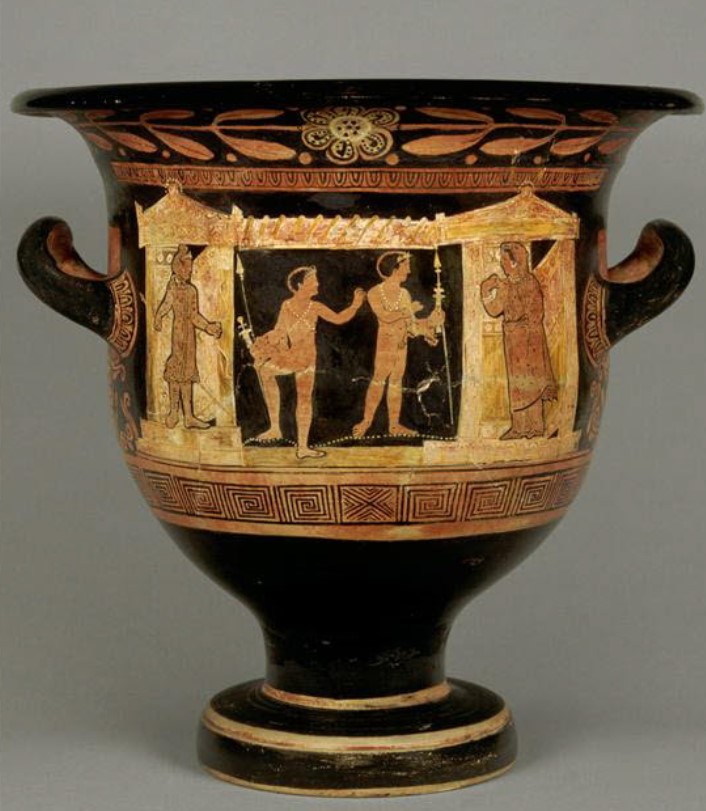
The Tochon Krater: Orestes, Iphigenia and Pylades in Tauris
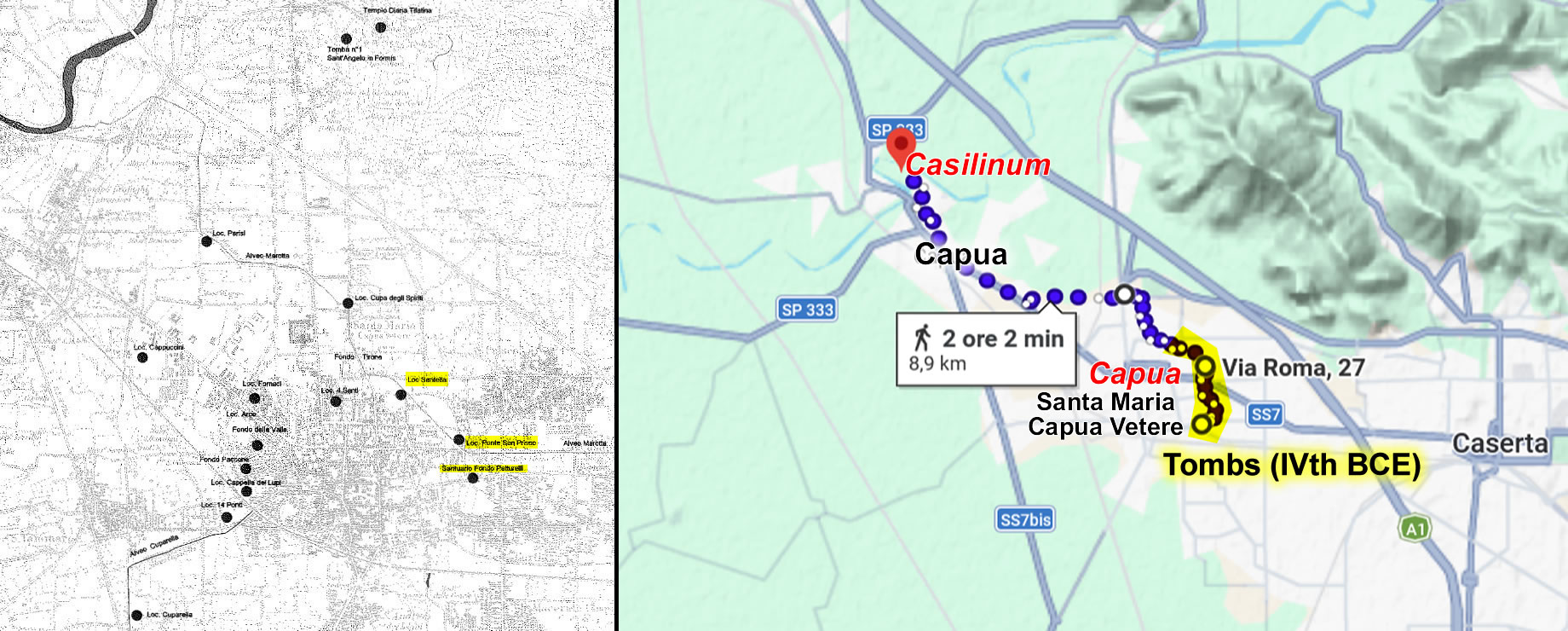
Distribution of necropolises around Capua
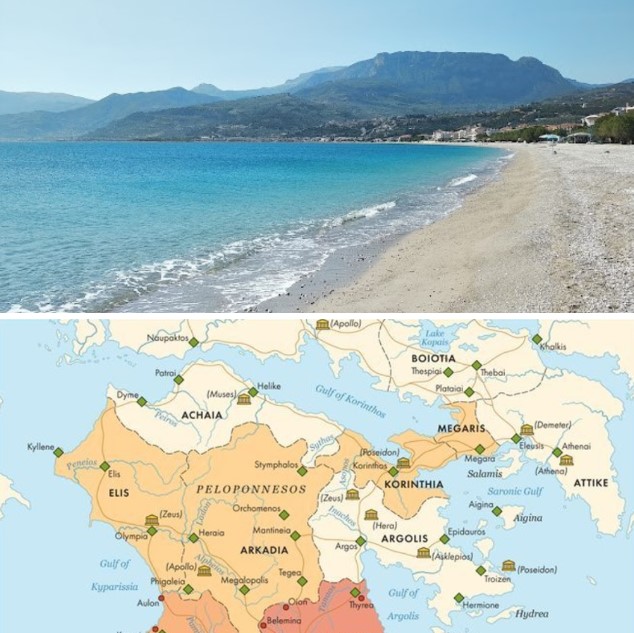
The territory of Achaia to c. 500 BCE
© andmorestory.eu - All right reserved